Buy lanpengeonline.eu ?
We are moving the project
lanpengeonline.eu .
Are you interested in purchasing the domain
lanpengeonline.eu ?
domain@kv-gmbh.de · 0541-91531010
Buy lanpengeonline.eu ?
What does "Schuster, bleib bei deinem Leisten" mean?
"Schuster, bleib bei deinem Leisten" is a German proverb that translates to "Shoemaker, stick to your last" in English. It is used to advise someone to stick to what they know best and not to meddle in areas outside of their expertise. The proverb emphasizes the importance of staying in one's lane and focusing on one's own skills and abilities. **
Which principles?
The principles referred to in the context of this conversation are likely the fundamental beliefs or guidelines that govern a particular system, organization, or practice. These principles could include values such as honesty, integrity, respect, fairness, and accountability. Adhering to these principles helps ensure ethical behavior, consistency, and effectiveness in decision-making and actions. **
Similar search terms for Simon-Schuster-UK-Principles
Top-Angebote
Products related to Simon-Schuster-UK-Principles:
-
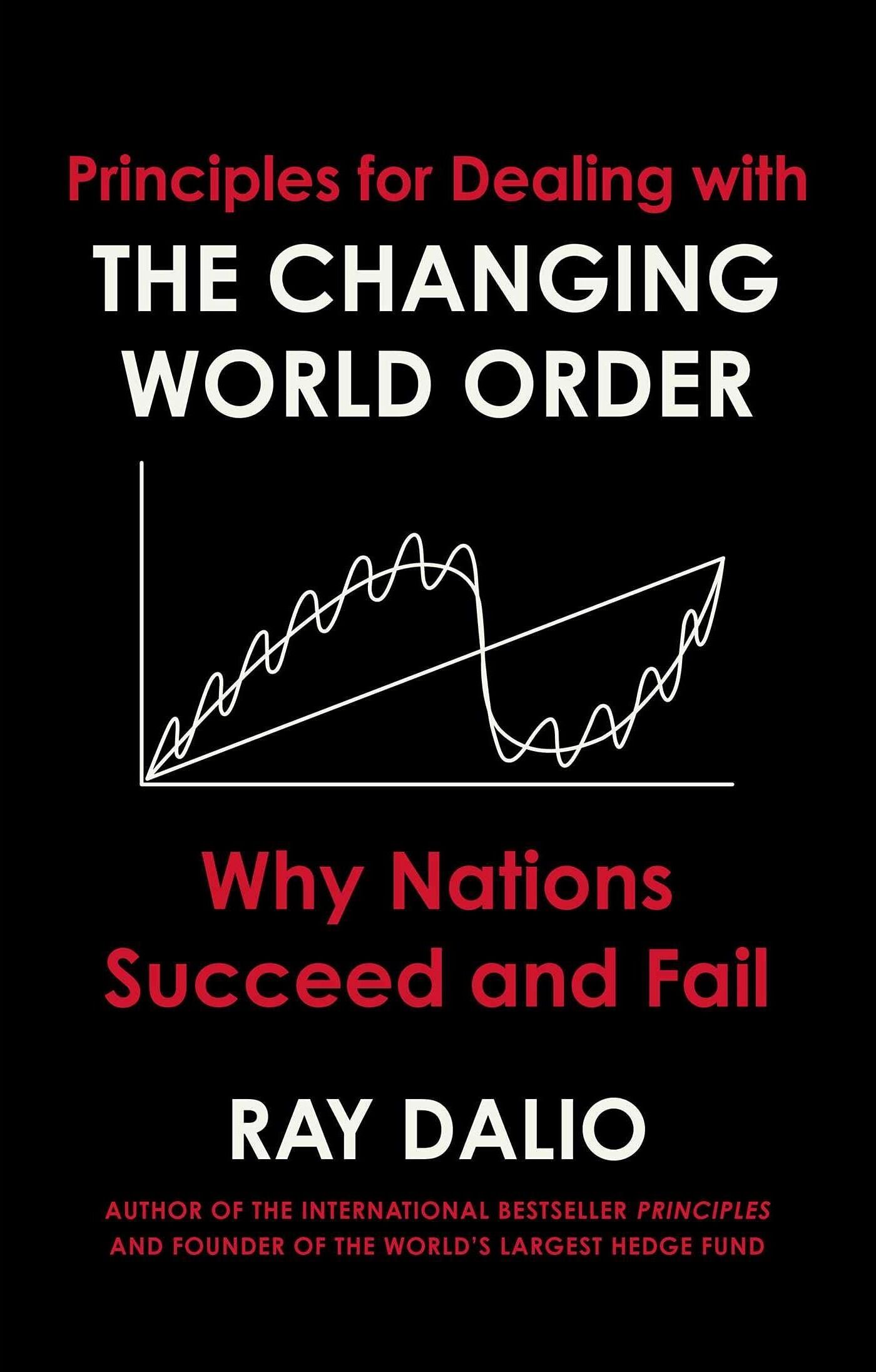
Simon & Schuster UK Principles for Dealing with the Changing World Order: Why Nations Succeed or Fail by Ray DalioFrom legendary investor Ray Dalio, author of the international bestseller Principles, who has spent half a century studying global economies and markets, Principles for Dealing with the Changing World Order examines history’s most turbulent economic and political periods to reveal why the times ahead will likely be radically different from those we’ve experienced in our lifetimes - but similar to those that have happened many times before. A few years ago, Ray Dalio noticed a confluence of political and economic conditions he hadn’t encountered before. They included huge debts and zero or near-zero interest rates that led to massive printing of money in the world’s three major reserve currencies; big political and social conflicts within countries, especially the US, due to the largest wealth, political and values disparities in more than 100 years; and the rising of a world power (China) to challenge the existing world power (US) and the existing world order. The last time that this confluence occurred was between 1930 and 1945. This realisation sent Dalio on a search for the repeating patterns and cause/effect relationships underlying all major changes in wealth and power over the last 500 years. In this remarkable and timely addition to his Principles series, Dalio brings readers along for his study of the major empires - including the Dutch, the British and the American - putting into perspective the 'Big Cycle' that has driven the successes and failures of all the world’s major countries throughout history. Dalio reveals the timeless and universal forces behind these shifts and uses them to look into the future, offering practical principles for positioning oneself for what’s ahead.13,99 £*Shipping: 2,99 £Secure redirect to the provider
-
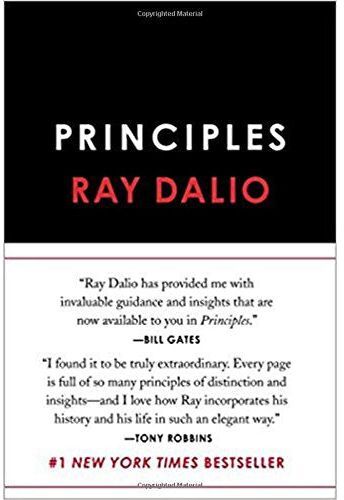
Principles: Life and Work by Ray Dalio - Non Fiction - Hardback Simon & SchusterRay Dalio, one of the world’s most successful investors and entrepreneurs, shares the unconventional principles that he’s developed, refined, and used over the past forty years to create unique results in both life and business—and which any person or organization can adopt to help achieve their goals. In 1975, Ray Dalio founded an investment firm, Bridgewater Associates, out of his two-bedroom apartment in New York City. Forty years later, Bridgewater has made more money for its clients than any other hedge fund in history and grown into the fifth most important private company in the United States, according to Fortune magazine. Dalio himself has been named to Time magazine’s list of the 100 most influential people in the world. Along the way, Dalio discovered a set of unique principles that have led to Bridgewater’s exceptionally effective culture, which he describes as “an idea meritocracy that strives to achieve meaningful work and meaningful relationships through radical transparency.” It is these principles, and not anything special about Dalio—who grew up an ordinary kid in a middle-class Long Island neighborhood—that he believes are the reason behind his success. In Principles, Dalio shares what he’s learned over the course of his remarkable career. He argues that life, management, economics, and investing can all be systemized into rules and understood like machines. The book’s hundreds of practical lessons, which are built around his cornerstones of “radical truth” and “radical transparency,” include Dalio laying out the most effective ways for individuals and organizations to make decisions, approach challenges, and build strong teams. He also describes the innovative tools the firm uses to bring an idea meritocracy to life, such as creating “baseball cards” for all employees that distill their strengths and weaknesses, and employing computerized decision-making systems to make believability-weighted decisions. While the book brims with novel ideas for organizations and institutions, Principles also offers a clear, straightforward approach to decision-making that Dalio believes anyone can apply, no matter what they’re seeking to achieve. Here, from a man who has been called both “the Steve Jobs of investing” and “the philosopher king of the financial universe” (CIO magazine), is a rare opportunity to gain proven advice unlike anything you’ll find in the conventional business press.15,99 £*Shipping: 2,99 £Secure redirect to the provider
-
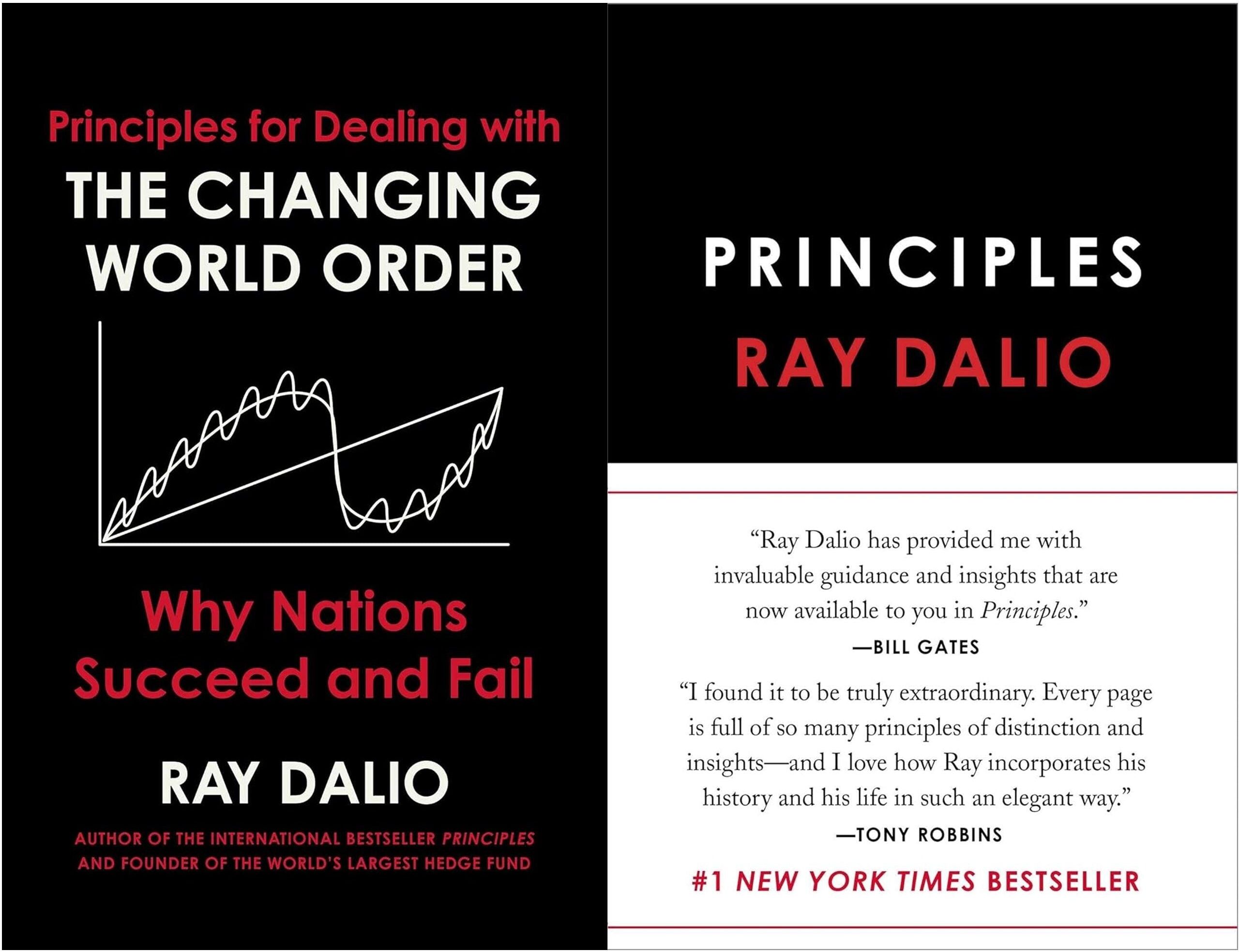
Simon & Schuster Principles and Principles for Dealing with the Changing World Order 2 Books Collection Set by Ray DalioRay Dalio Collection 2 Books Set (Principles Life and Work, Principles for Dealing with the Changing World Order): Principles Life and Work: In Principles, Dalio shares what he’s learned over the course of his remarkable career. He argues that life, management, economics, and investing can all be systemized into rules and understood like machines. The book’s hundreds of practical lessons, which are built around his cornerstones of “radical truth” and “radical transparency,” include Dalio laying out the most effective ways for individuals and organizations to make decisions, approach challenges, and build strong teams. Principles for Dealing with the Changing World Order: A few years ago, Ray Dalio noticed a confluence of political and economic conditions he hadn’t encountered before. They included huge debts and zero or near-zero interest rates that led to massive printing of money in the world’s three major reserve currencies; big political and social conflicts within countries, especially the US, due to the largest wealth, political and values disparities in more than 100 years; and the rising of a world power (China) to challenge the existing world power (US) and the existing world order.30,99 £*Shipping: 2,99 £Secure redirect to the provider
-
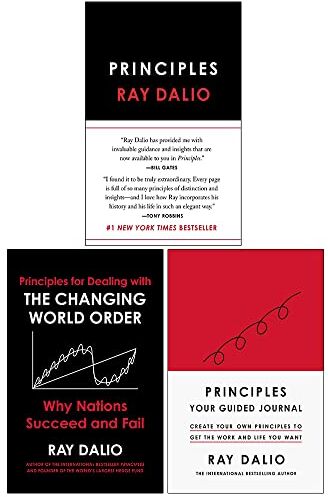
Simon and Schuster Ray Dalio Collection 3 Books Set (Principles Life and Work, Principles for Dealing with the Changing World Order, Principles Your Guided Journal)Ray Dalio Collection 3 Books Set (Principles Life and Work, Principles for Dealing with the Changing World Order, Principles Your Guided Journal) Principles Life and Work In Principles, Dalio shares what he’s learned over the course of his remarkable career. He argues that life, management, economics, and investing can all be systemized into rules and understood like machines. The book’s hundreds of practical lessons, which are built around his cornerstones of “radical truth” and “radical transparency,” include Dalio laying out the most effective ways for individuals and organizations to make decisions, approach challenges, and build strong teams. Principles for Dealing with the Changing World Order A few years ago, Ray Dalio noticed a confluence of political and economic conditions he hadn’t encountered before. They included huge debts and zero or near-zero interest rates that led to massive printing of money in the world’s three major reserve currencies; big political and social conflicts within countries, especially the US, due to the largest wealth, political and values disparities in more than 100 years; and the rising of a world power (China) to challenge the existing world power (US) and the existing world order. Principles Your Guided Journal In his international bestseller Principles, legendary investor Ray Dalio introduced millions of readers around the world to the unconventional approach he developed as the founder and builder of Bridgewater Associates, the largest and most successful hedge fund in the world. Dalio attributes his unique success to his process of recording, refining and acting on a set of well-defined principles, which are effectively decision-rules for getting what you want out of life and work.34,99 £*Shipping: 2,99 £Secure redirect to the provider

-
What are principles? How are people without principles?
Principles are fundamental beliefs or values that guide a person's behavior and decision-making. They serve as a moral compass and help individuals make ethical choices in their personal and professional lives. People without principles may act in a self-serving or unethical manner, lacking a sense of integrity and moral responsibility. Without principles, individuals may struggle to build trust and maintain healthy relationships with others, as their actions may be unpredictable and inconsistent. **
-
Would you sell your principles for money?
No, I would not sell my principles for money. My principles are an integral part of who I am and guide my actions and decisions. While money is important, it is not worth compromising my values and integrity. I believe that staying true to my principles is essential for living a fulfilling and meaningful life. **
-
Love or principles?
It is important to strike a balance between love and principles in any relationship. While love is essential for emotional connection and support, principles provide a foundation for mutual respect and understanding. Both love and principles are necessary for a healthy and fulfilling relationship, as they help guide behavior and decision-making while also fostering a deep emotional connection. Ultimately, finding a harmonious blend of love and principles can lead to a strong and lasting bond. **
-
Which second name suits Simon?
It's difficult to determine the best second name for Simon without knowing more about his personality, background, or preferences. However, some popular second names that could suit Simon include James, Alexander, Michael, or William. Ultimately, the best second name for Simon would be one that holds personal significance or meaning to him. **
What are the orthographic principles of the lexical and textual principles?
The orthographic principles of lexical and textual principles refer to the rules and conventions governing the correct spelling, punctuation, and formatting of words and sentences in written language. Lexical principles focus on the correct spelling and usage of individual words, including understanding prefixes, suffixes, and root words. Textual principles, on the other hand, involve the correct organization and structure of sentences and paragraphs, including proper punctuation, capitalization, and paragraphing to ensure clarity and coherence in written communication. Both sets of principles are essential for effective written communication and help ensure that written texts are clear, accurate, and easy to read. **
What are orthographic principles?
Orthographic principles are rules and conventions that govern the correct way to write and spell words in a language. These principles include guidelines for using capitalization, punctuation, and spelling. Following orthographic principles helps ensure clarity, consistency, and accuracy in written communication. Adhering to these principles also helps to maintain the standardization and uniformity of written language. **
Top-Angebote
Products related to Simon-Schuster-UK-Principles:
-
Simon & Schuster Principles: Life and Work by Ray Dalio#1 NEW YORK TIMES BESTSELLER * 5 MILLION COPIES SOLD “Significant...The book is both instructive and surprisingly moving.” —The New York Times Ray Dalio, one of the world’s most successful investors and entrepreneurs, shares the unconventional principles that he’s developed, refined, and used over the past forty years to create unique results in both life and business—and which any person or organization can adopt to help achieve their goals. In 1975, Ray Dalio founded an investment firm, Bridgewater Associates, out of his two-bedroom apartment in New York City. Forty years later, Bridgewater has made more money for its clients than any other hedge fund in history and grown into the fifth most important private company in the United States, according to Fortune magazine. Dalio himself has been named to Time magazine’s list of the 100 most influential people in the world. Along the way, Dalio discovered a set of unique principles that have led to Bridgewater’s exceptionally effective culture, which he describes as “an idea meritocracy that strives to achieve meaningful work and meaningful relationships through radical transparency.” It is these principles, and not anything special about Dalio—who grew up an ordinary kid in a middle-class Long Island neighborhood—that he believes are the reason behind his success. In Principles, Dalio shares what he’s learned over the course of his remarkable career. He argues that life, management, economics, and investing can all be systemized into rules and understood like machines. The book’s hundreds of practical lessons, which are built around his cornerstones of “radical truth” and “radical transparency,” include Dalio laying out the most effective ways for individuals and organizations to make decisions, approach challenges, and build strong teams. He also describes the innovative tools the firm uses to bring an idea meritocracy to life, such as creating “baseball cards” for all employees that distill their strengths and weaknesses, and employing computerized decision-making systems to make believability-weighted decisions. While the book brims with novel ideas for organizations and institutions, Principles also offers a clear, straightforward approach to decision-making that Dalio believes anyone can apply, no matter what they’re seeking to achieve. Here, from a man who has been called both “the Steve Jobs of investing” and “the philosopher king of the financial universe” (CIO magazine), is a rare opportunity to gain proven advice unlike anything you’ll find in the conventional business press.15,99 £*Shipping: 2,99 £Secure redirect to the provider
-
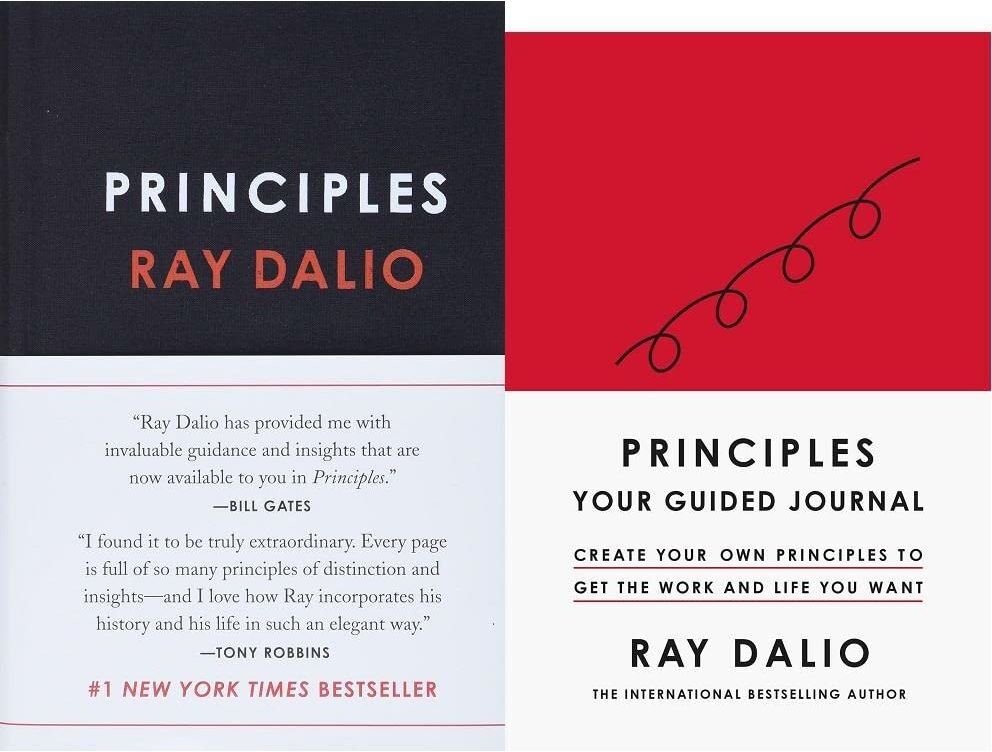
Simon & Schuster Principles Life and Work, Principles Your Guided Journal 2 Books Collection SetPrinciples: Life and Work, Principles Your Guided Journal 2 Books Collection Set Principles: Life and Work In Principles, Dalio shares what he’s learned over the course of his remarkable career. He argues that life, management, economics, and investing can all be systemized into rules and understood like machines. The book’s hundreds of practical lessons, which are built around his cornerstones of “radical truth” and “radical transparency,” include Dalio laying out the most effective ways for individuals and organizations to make decisions, approach challenges, and build strong teams. He also describes the innovative tools the firm uses to bring an idea meritocracy to life, such as creating “baseball cards” for all employees that distill their strengths and weaknesses, and employing computerized decision-making systems to make believability-weighted decisions. While the book brims with novel ideas for organizations and institutions, Principles also offers a clear, straightforward approach to decision-making that Dalio believes anyone can apply, no matter what they’re seeking to achieve. Principles: Your Guided Journal: With this new journal, Dalio takes his goal one step further to help readers reflect on and record their own principles. He does that by providing a series of guided exercises and questions for reflecting on what you’re like, what you value, and what principles will best help you achieve your goals. These exercises draw from key concepts in the original Principles book, including: 1. How to identify your strengths, weaknesses, motivations and preferences 2. How to use the 'five-step process' to achieve your goals 3. How to become both 'assertive and open-minded at the same time' 4. How to maximise your learning from your mistakes (which are inevitable)22,99 £*Shipping: 2,99 £Secure redirect to the provider
-
Simon & Schuster UK Principles for Dealing with the Changing World Order: Why Nations Succeed or Fail by Ray DalioFrom legendary investor Ray Dalio, author of the international bestseller Principles, who has spent half a century studying global economies and markets, Principles for Dealing with the Changing World Order examines history’s most turbulent economic and political periods to reveal why the times ahead will likely be radically different from those we’ve experienced in our lifetimes - but similar to those that have happened many times before. A few years ago, Ray Dalio noticed a confluence of political and economic conditions he hadn’t encountered before. They included huge debts and zero or near-zero interest rates that led to massive printing of money in the world’s three major reserve currencies; big political and social conflicts within countries, especially the US, due to the largest wealth, political and values disparities in more than 100 years; and the rising of a world power (China) to challenge the existing world power (US) and the existing world order. The last time that this confluence occurred was between 1930 and 1945. This realisation sent Dalio on a search for the repeating patterns and cause/effect relationships underlying all major changes in wealth and power over the last 500 years. In this remarkable and timely addition to his Principles series, Dalio brings readers along for his study of the major empires - including the Dutch, the British and the American - putting into perspective the 'Big Cycle' that has driven the successes and failures of all the world’s major countries throughout history. Dalio reveals the timeless and universal forces behind these shifts and uses them to look into the future, offering practical principles for positioning oneself for what’s ahead.13,99 £*Shipping: 2,99 £Secure redirect to the provider
-
Principles: Life and Work by Ray Dalio - Non Fiction - Hardback Simon & SchusterRay Dalio, one of the world’s most successful investors and entrepreneurs, shares the unconventional principles that he’s developed, refined, and used over the past forty years to create unique results in both life and business—and which any person or organization can adopt to help achieve their goals. In 1975, Ray Dalio founded an investment firm, Bridgewater Associates, out of his two-bedroom apartment in New York City. Forty years later, Bridgewater has made more money for its clients than any other hedge fund in history and grown into the fifth most important private company in the United States, according to Fortune magazine. Dalio himself has been named to Time magazine’s list of the 100 most influential people in the world. Along the way, Dalio discovered a set of unique principles that have led to Bridgewater’s exceptionally effective culture, which he describes as “an idea meritocracy that strives to achieve meaningful work and meaningful relationships through radical transparency.” It is these principles, and not anything special about Dalio—who grew up an ordinary kid in a middle-class Long Island neighborhood—that he believes are the reason behind his success. In Principles, Dalio shares what he’s learned over the course of his remarkable career. He argues that life, management, economics, and investing can all be systemized into rules and understood like machines. The book’s hundreds of practical lessons, which are built around his cornerstones of “radical truth” and “radical transparency,” include Dalio laying out the most effective ways for individuals and organizations to make decisions, approach challenges, and build strong teams. He also describes the innovative tools the firm uses to bring an idea meritocracy to life, such as creating “baseball cards” for all employees that distill their strengths and weaknesses, and employing computerized decision-making systems to make believability-weighted decisions. While the book brims with novel ideas for organizations and institutions, Principles also offers a clear, straightforward approach to decision-making that Dalio believes anyone can apply, no matter what they’re seeking to achieve. Here, from a man who has been called both “the Steve Jobs of investing” and “the philosopher king of the financial universe” (CIO magazine), is a rare opportunity to gain proven advice unlike anything you’ll find in the conventional business press.15,99 £*Shipping: 2,99 £Secure redirect to the provider
-
What does "Schuster, bleib bei deinem Leisten" mean?
"Schuster, bleib bei deinem Leisten" is a German proverb that translates to "Shoemaker, stick to your last" in English. It is used to advise someone to stick to what they know best and not to meddle in areas outside of their expertise. The proverb emphasizes the importance of staying in one's lane and focusing on one's own skills and abilities. **
-
Which principles?
The principles referred to in the context of this conversation are likely the fundamental beliefs or guidelines that govern a particular system, organization, or practice. These principles could include values such as honesty, integrity, respect, fairness, and accountability. Adhering to these principles helps ensure ethical behavior, consistency, and effectiveness in decision-making and actions. **
-
What are principles? How are people without principles?
Principles are fundamental beliefs or values that guide a person's behavior and decision-making. They serve as a moral compass and help individuals make ethical choices in their personal and professional lives. People without principles may act in a self-serving or unethical manner, lacking a sense of integrity and moral responsibility. Without principles, individuals may struggle to build trust and maintain healthy relationships with others, as their actions may be unpredictable and inconsistent. **
-
Would you sell your principles for money?
No, I would not sell my principles for money. My principles are an integral part of who I am and guide my actions and decisions. While money is important, it is not worth compromising my values and integrity. I believe that staying true to my principles is essential for living a fulfilling and meaningful life. **
Similar search terms for Simon-Schuster-UK-Principles
-
Simon & Schuster Principles and Principles for Dealing with the Changing World Order 2 Books Collection Set by Ray DalioRay Dalio Collection 2 Books Set (Principles Life and Work, Principles for Dealing with the Changing World Order): Principles Life and Work: In Principles, Dalio shares what he’s learned over the course of his remarkable career. He argues that life, management, economics, and investing can all be systemized into rules and understood like machines. The book’s hundreds of practical lessons, which are built around his cornerstones of “radical truth” and “radical transparency,” include Dalio laying out the most effective ways for individuals and organizations to make decisions, approach challenges, and build strong teams. Principles for Dealing with the Changing World Order: A few years ago, Ray Dalio noticed a confluence of political and economic conditions he hadn’t encountered before. They included huge debts and zero or near-zero interest rates that led to massive printing of money in the world’s three major reserve currencies; big political and social conflicts within countries, especially the US, due to the largest wealth, political and values disparities in more than 100 years; and the rising of a world power (China) to challenge the existing world power (US) and the existing world order.30,99 £*Shipping: 2,99 £Secure redirect to the provider
-
Simon and Schuster Ray Dalio Collection 3 Books Set (Principles Life and Work, Principles for Dealing with the Changing World Order, Principles Your Guided Journal)Ray Dalio Collection 3 Books Set (Principles Life and Work, Principles for Dealing with the Changing World Order, Principles Your Guided Journal) Principles Life and Work In Principles, Dalio shares what he’s learned over the course of his remarkable career. He argues that life, management, economics, and investing can all be systemized into rules and understood like machines. The book’s hundreds of practical lessons, which are built around his cornerstones of “radical truth” and “radical transparency,” include Dalio laying out the most effective ways for individuals and organizations to make decisions, approach challenges, and build strong teams. Principles for Dealing with the Changing World Order A few years ago, Ray Dalio noticed a confluence of political and economic conditions he hadn’t encountered before. They included huge debts and zero or near-zero interest rates that led to massive printing of money in the world’s three major reserve currencies; big political and social conflicts within countries, especially the US, due to the largest wealth, political and values disparities in more than 100 years; and the rising of a world power (China) to challenge the existing world power (US) and the existing world order. Principles Your Guided Journal In his international bestseller Principles, legendary investor Ray Dalio introduced millions of readers around the world to the unconventional approach he developed as the founder and builder of Bridgewater Associates, the largest and most successful hedge fund in the world. Dalio attributes his unique success to his process of recording, refining and acting on a set of well-defined principles, which are effectively decision-rules for getting what you want out of life and work.34,99 £*Shipping: 2,99 £Secure redirect to the provider
-
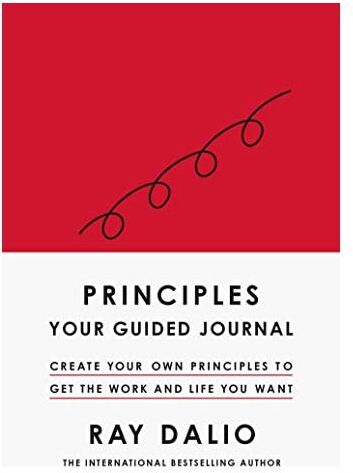
Simon & Schuster Principles: Your Guided Journal: Create Your Own Principles to Get the Work and Life You Want by Ray DalioIn his international bestseller Principles, legendary investor Ray Dalio introduced millions of readers around the world to the unconventional approach he developed as the founder and builder of Bridgewater Associates, the largest and most successful hedge fund in the world. Dalio attributes his unique success to his process of recording, refining and acting on a set of well-defined principles, which are effectively decision-rules for getting what you want out of life and work. His goal in publishing the book was to show readers the value of principle-based thinking so that they could develop their own principles, aligned with their own values, for getting whatever they wanted out of life. With this new journal, Dalio takes his goal one step further to help readers reflect on and record their own principles. He does that by providing a series of guided exercises and questions for reflecting on what you’re like, what you value, and what principles will best help you achieve your goals. These exercises draw from key concepts in the original Principles book, including: 1. How to identify your strengths, weaknesses, motivations and preferences 2. How to use the 'five-step process' to achieve your goals 3. How to become both 'assertive and open-minded at the same time' 4. How to maximise your learning from your mistakes (which are inevitable) All of these exercises can optionally be enhanced using the free Principles in Action iOS and Android app, which provides an even more interactive, multimedia experience, and they are followed by a number of blank journal pages containing thought-provoking and unconventional prompts from Principles aimed at helping you formulate your own principles. The experience concludes with a structured reflection on where you and your loved ones are along life’s journey, leaving you with a highly personalised, practical playbook for achieving success in the years ahead.12,99 £*Shipping: 2,99 £Secure redirect to the provider
-
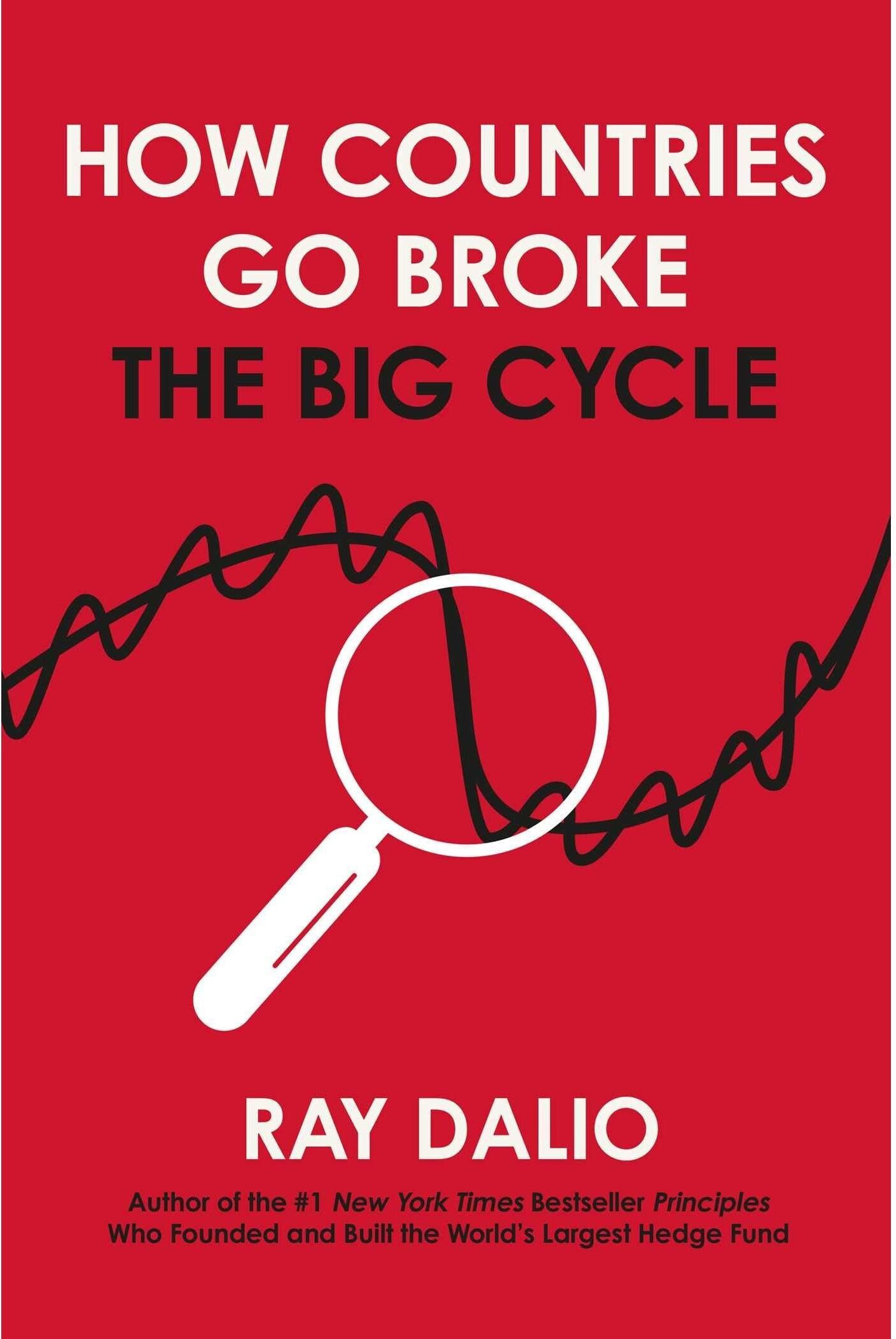
Simon and Schuster UK How Countries Go Broke: Principles for Navigating the Big Debt Cycle, Where We Are Headed, and What We Should DoAn urgent warning about the global economy from Ray Dalio, the #1 New York Times bestselling author of Principles. Do big government debts threaten our collective well-being? Are there limits to debt growth? Can a big, important reserve currency country like the United States really go broke – and what would that look like? For decades, politicians, policymakers and investors have debated these questions, but the answers have eluded them. In this groundbreaking book, Ray Dalio, one of the greatest investors of our time who anticipated the 2008 global financial crisis and the 2010–12 European debt crisis, shares for the first time his detailed explanation of what he calls the 'Big Debt Cycle'. Understanding this cycle is critical for helping policymakers, investors and the general public grasp where we are and where we are headed with the debt issue. Dalio's model points toward surprisingly straightforward solutions for dealing with the debt problems that the US, Europe, Japan and China face today. How Countries Go Broke also shows how these debt problems are related to the other forces – political within countries, geopolitical between countries, natural (droughts, floods and pandemics) and technological (most importantly, AI) – that together are causing what Dalio calls the 'Overall Big Cycle' changes in the world order. By reading this book, you will improve your understanding of what's happening now and what to do about it.17,99 £*Shipping: 2,99 £Secure redirect to the provider
-
Love or principles?
It is important to strike a balance between love and principles in any relationship. While love is essential for emotional connection and support, principles provide a foundation for mutual respect and understanding. Both love and principles are necessary for a healthy and fulfilling relationship, as they help guide behavior and decision-making while also fostering a deep emotional connection. Ultimately, finding a harmonious blend of love and principles can lead to a strong and lasting bond. **
-
Which second name suits Simon?
It's difficult to determine the best second name for Simon without knowing more about his personality, background, or preferences. However, some popular second names that could suit Simon include James, Alexander, Michael, or William. Ultimately, the best second name for Simon would be one that holds personal significance or meaning to him. **
-
What are the orthographic principles of the lexical and textual principles?
The orthographic principles of lexical and textual principles refer to the rules and conventions governing the correct spelling, punctuation, and formatting of words and sentences in written language. Lexical principles focus on the correct spelling and usage of individual words, including understanding prefixes, suffixes, and root words. Textual principles, on the other hand, involve the correct organization and structure of sentences and paragraphs, including proper punctuation, capitalization, and paragraphing to ensure clarity and coherence in written communication. Both sets of principles are essential for effective written communication and help ensure that written texts are clear, accurate, and easy to read. **
-
What are orthographic principles?
Orthographic principles are rules and conventions that govern the correct way to write and spell words in a language. These principles include guidelines for using capitalization, punctuation, and spelling. Following orthographic principles helps ensure clarity, consistency, and accuracy in written communication. Adhering to these principles also helps to maintain the standardization and uniformity of written language. **
* All prices are inclusive of VAT and, if applicable, plus shipping costs. The offer information is based on the details provided by the respective shop and is updated through automated processes. Real-time updates do not occur, so deviations can occur in individual cases. ** Note: Parts of this content were created by AI.