Buy lanpengeonline.eu ?
We are moving the project
lanpengeonline.eu .
Are you interested in purchasing the domain
lanpengeonline.eu ?
domain@kv-gmbh.de · 0541-91531010
Buy lanpengeonline.eu ?
Do smarter people think faster?
Smarter people may not necessarily think faster in terms of processing speed, but they may have the ability to process and analyze information more efficiently. Their cognitive abilities and problem-solving skills may allow them to come to conclusions and make decisions more quickly. However, thinking speed can also be influenced by factors such as attention, focus, and mental agility, which may not always be directly correlated with intelligence. Therefore, while intelligence can contribute to faster thinking in some cases, it is not the sole determining factor. **
Are people who can calculate faster in their head or read quickly smarter?
Intelligence is a complex trait that cannot be solely determined by one's ability to calculate quickly or read fast. These skills may be indicative of certain cognitive abilities, but they do not encompass the full range of intelligence. Intelligence is multifaceted and includes various abilities such as problem-solving, critical thinking, creativity, and emotional intelligence. Therefore, it is not accurate to equate quick mental calculations or fast reading with overall intelligence. **

Similar search terms for Atomic-Habits-Smarter-Faster
Top-Angebote
Products related to Atomic-Habits-Smarter-Faster:
-
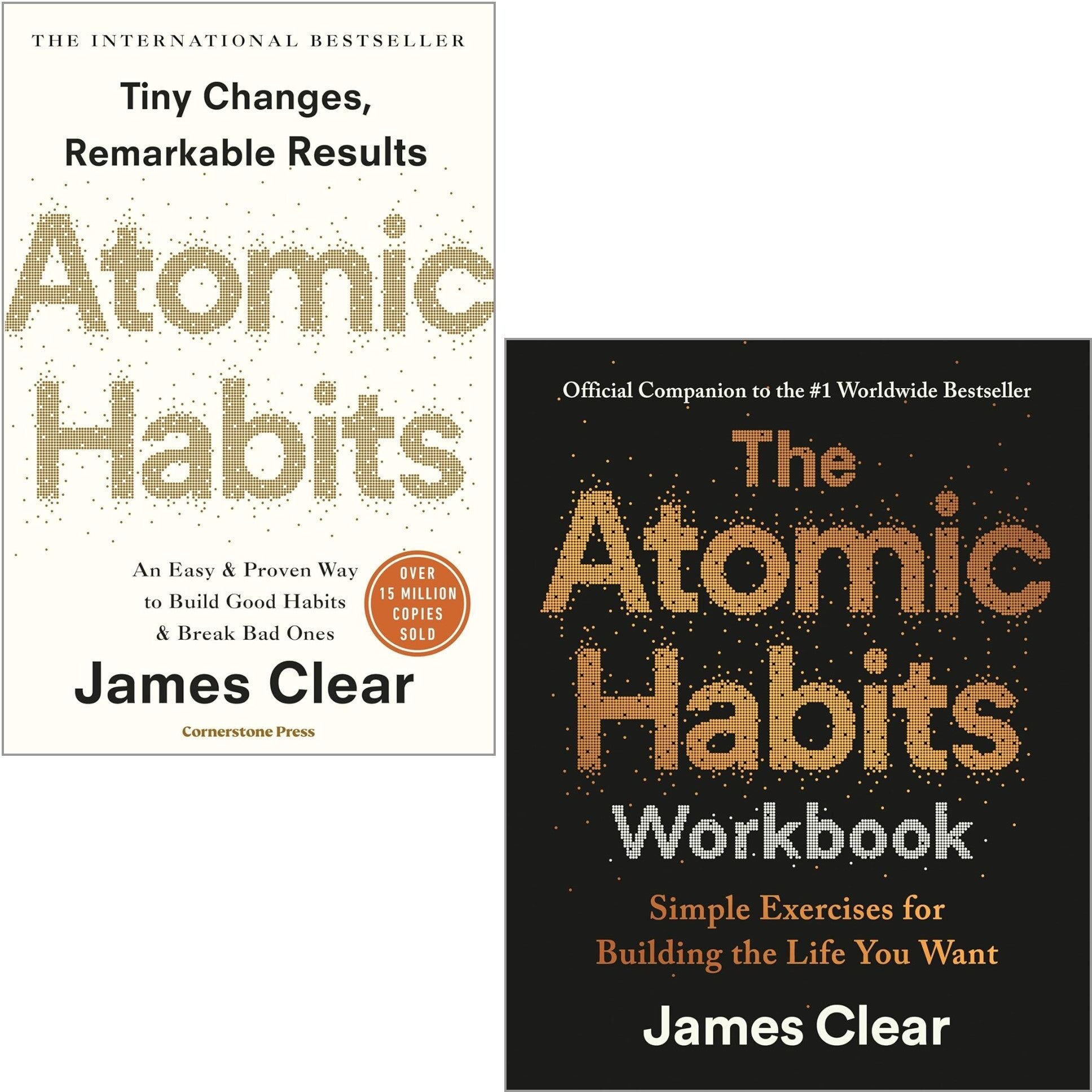
Cornerstone Press Atomic Habits & The Atomic Habits Workbook – 2 Books Collection Set by James Clear Build Good Habits & Break Bad OnesTransform your habits and your life with the Atomic Habits & The Atomic Habits Workbook – 2 Books Collection Set by James Clear. This powerful set combines the bestselling book Atomic Habits, which reveals a proven system for building good habits and breaking bad ones, with the official companion workbook, designed to help you apply these principles in everyday life. Together, they offer a practical, step-by-step approach to creating lasting personal and professional change. Based on behavioral science and real-world examples, James Clear shows how small, consistent improvements lead to remarkable results. The workbook provides exercises, prompts, and habit-tracking tools to turn ideas into action. Atomic Habits Transform your life with tiny changes in behaviour, starting now. People think that when you want to change your life, you need to think big. But world-renowned habits expert James Clear has discovered another way. He knows that real change comes from the compound effect of hundreds of small decisions: doing two push-ups a day, waking up five minutes early, or holding a single short phone call. He calls them atomic habits. In this ground-breaking book, Clears reveals exactly how these minuscule changes can grow into such life-altering outcomes. He uncovers a handful of simple life hacks (the forgotten art of Habit Stacking, the unexpected power of the Two Minute Rule, or the trick to entering the Goldilocks Zone), and delves into cutting-edge psychology and neuroscience to explain why they matter. Along the way, he tells inspiring stories of Olympic gold medalists, leading CEOs, and distinguished scientists who have used the science of tiny habits to stay productive, motivated, and happy. These small changes will have a revolutionary effect on your career, your relationships, and your life. The Atomic Habits Workbook The official companion to the #1 worldwide bestseller is the next step in your habits toolkit. Guided journal prompts will help you engage with your habits and the forces that impact them. Thought-provoking exercises allow you to implement the Atomic Habits theories and see your life transform. This workbook takes the reader from understanding habits to living them. James Clear's system helps good habits emerge naturally while unwanted habits fade away. What's included: - Guided templates for easy habit tracking and habit stacking - Journaling prompts to help you assess your physical and social environments, identify forces at play, and strategize for greatest habit success - Strategies for overcoming the habit plateau and sticking with your habits, even when the going gets rough - Plans for adapting your habits to fit your ever-changing life - New ideas from Clear on the role of fun in habit formation Packed with tips, tricks, and activities, The Atomic Habits Workbook is your step-by-step guide to making small changes that will transform your habits and deliver remarkable results.21,99 £*Shipping: 2,99 £Secure redirect to the provider
-
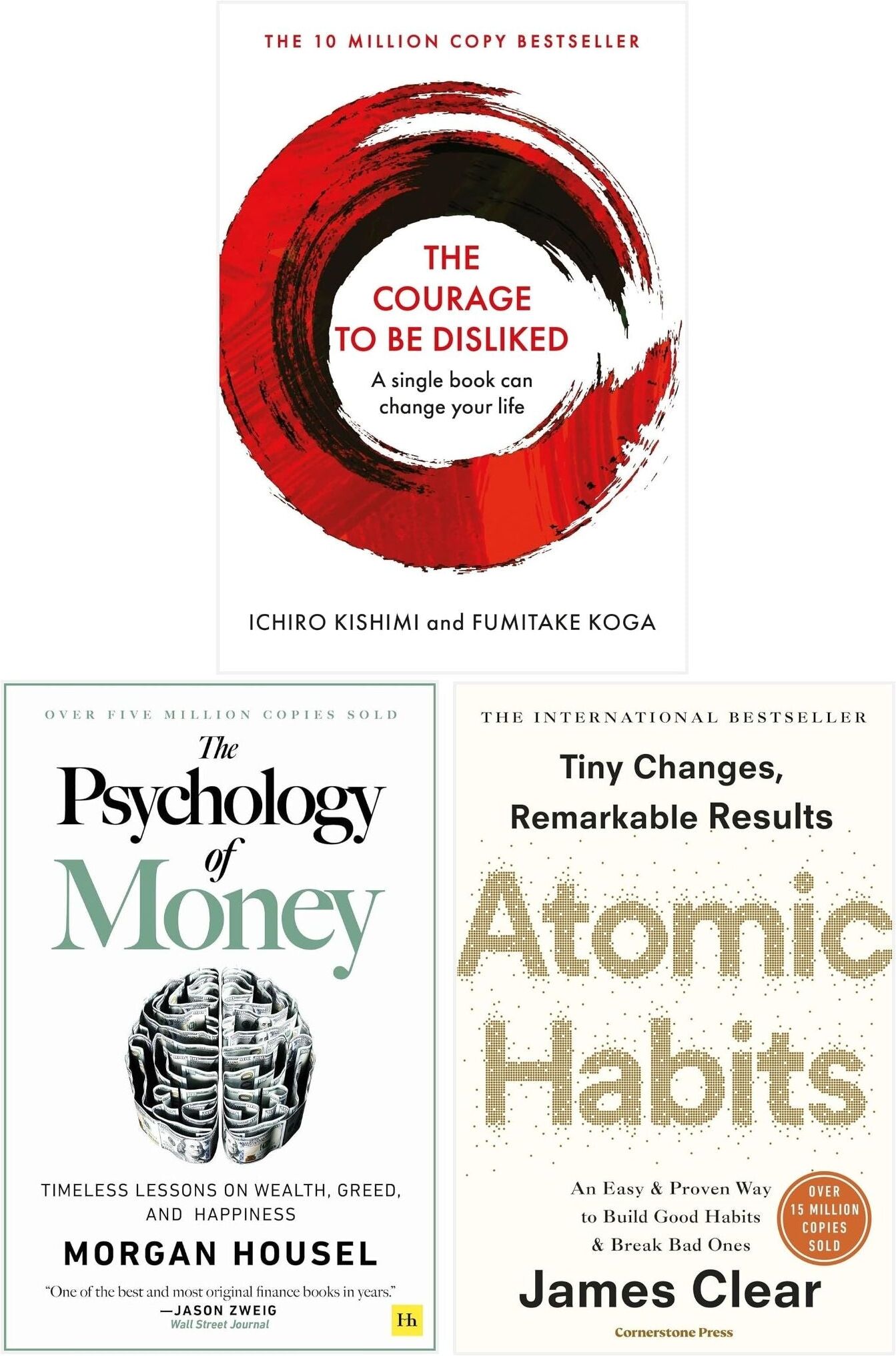
Harriman House The Psychology of Money, Atomic Habits & The Courage to Be Disliked – 3 Book Collection Set Bestselling Self-Development, Personal Finance, Self-HelUpgrade your mindset, habits, and financial thinking with this powerful 3-book collection set, featuring three of the most influential modern self-development titles. This essential bundle includes: The Psychology of Money by Morgan Housel – Discover how emotions and behaviour shape financial decisions and long-term wealth. Atomic Habits by James Clear – Learn how small habits can create powerful, lasting change. The Courage to Be Disliked by Ichiro Kishimi & Fumitake Koga** – Explore a transformative approach to happiness, freedom, and self-acceptance based on Adlerian psychology. Together, these books offer a complete guide to financial wisdom, personal growth, emotional resilience, and habit-building, making this set ideal for anyone looking to improve their life and mindset. Why Readers Love This Collection: Includes 3 bestselling modern self-development books Covers money, habits, mindset, and personal freedom Practical, easy-to-apply life lessons Perfect for beginners and experienced readers alike Ideal gift for motivation and self-improvement A must-have for anyone on a journey of personal growth, this collection delivers powerful insights for building a better, more successful life.22,99 £*Shipping: 2,99 £Secure redirect to the provider
-
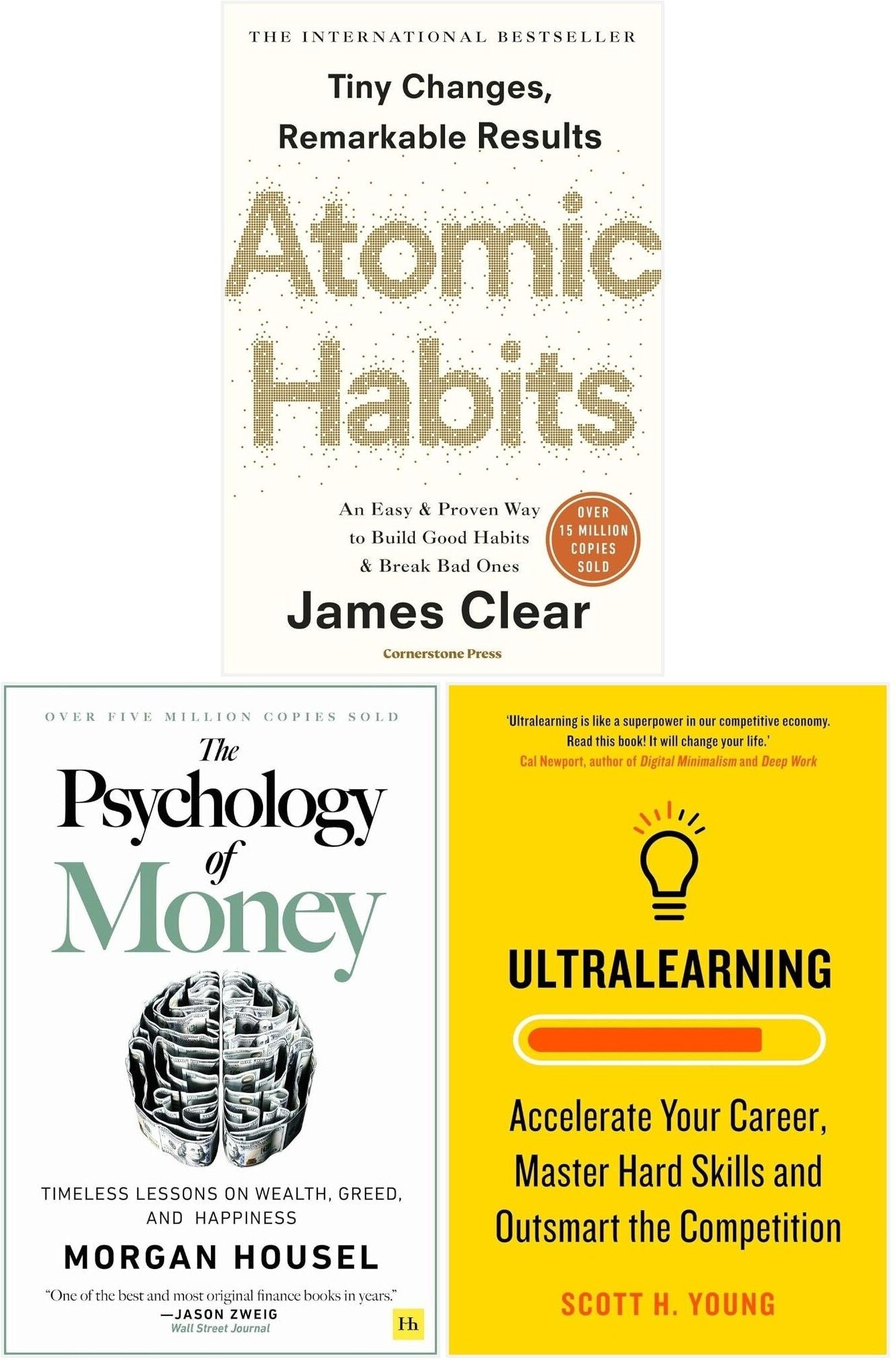
Thorsons/Cornerstone/Harriman House Ultralearning, Atomic Habits and The Psychology of Money 3 Books SetUltralearning Future-proof your career and maximize your competitive advantage by learning the skill necessary to stay relevant, reinvent yourself, and adapt to whatever the workplace throws your way in this essential guide. Faced with tumultuous economic times and rapid technological change, staying ahead in your career depends on continual learning―a lifelong mastery of new ideas, subjects, and skills. If you want to accomplish more and stand apart from everyone else, you need to become an ultralearner. Atomic Habits Transform your life with tiny changes in behaviour, starting now. People think that when you want to change your life, you need to think big. But world-renowned habits expert James Clear has discovered another way. He knows that real change comes from the compound effect of hundreds of small decisions: doing two push-ups a day, waking up five minutes early, or holding a single short phone call. The Psychology of Money Doing well with money isn't necessarily about what you know. It's about how you behave. And behavior is hard to teach, even to really smart people. Money investing, personal finance, and business decisions is typically taught as a math-based field, where data and formulas tell us exactly what to do. But in the real world people don't make financial decisions on a spreadsheet. They make them at the dinner table, or in a meeting room, where personal history, your own unique view of the world, ego, pride, marketing, and odd incentives are scrambled together.29,99 £*Shipping: 2,99 £Secure redirect to the provider
-
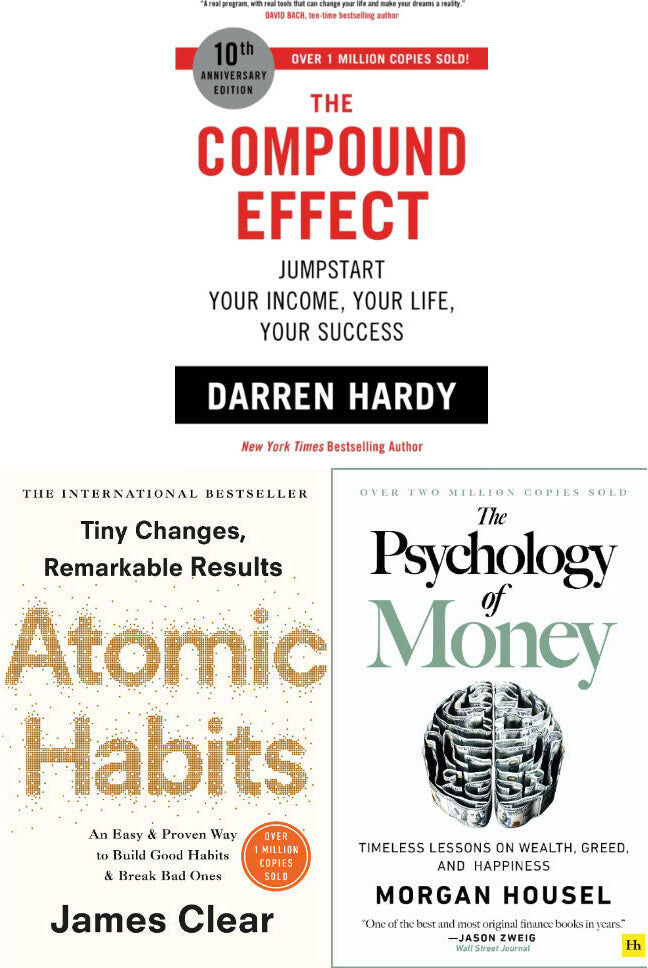
Harriman House Atomic Habits, The Compound Effect, The Psychology of Money 3 Books Collection SetAtomic Habits People think that when you want to change your life, you need to think big. But world-renowned habits expert James Clear has discovered another way. He knows that real change comes from the compound effect of hundreds of small decisions: doing two push-ups a day, waking up five minutes early, or holding a single short phone call. The Compound Effect As the central curator of the success media industry for over 25 years, author Darren Hardy has heard it all, seen it all, and tried most of it. This book reveals the core principles that drive success. The Compound Effect contains the essence of what every superachiever needs to know, practice, and master to obtain extraordinary success. Inside you will find strategies on: How to win--every time! The Psychology of Money Doing well with money isn't necessarily about what you know. It's about how you behave. And behavior is hard to teach, even to really smart people. Money investing, personal finance, and business decisions is typically taught as a math-based field, where data and formulas tell us exactly what to do. But in the real world people don't make financial decisions on a spreadsheet.22,95 £*Shipping: 2,99 £Secure redirect to the provider
-
Does a lot of thinking make you smarter and lead to faster thinking?
Engaging in a lot of thinking can certainly improve cognitive abilities and lead to faster thinking in some cases. However, the quality of thinking is just as important as the quantity. Engaging in critical thinking, problem-solving, and learning new information can all contribute to improved cognitive function. Additionally, taking breaks and allowing the mind to rest and recharge is also important for optimal cognitive performance. Therefore, while thinking a lot can contribute to improved intelligence and faster thinking, it is important to balance it with rest and relaxation. **
-
Can sleep habits only be habits that can be changed?
Sleep habits are behaviors and routines that can be changed with effort and consistency. By making adjustments to our bedtime routine, sleep environment, and overall lifestyle choices, we can improve our sleep habits. While it may take time and dedication to establish new habits, it is possible to make positive changes to our sleep patterns for better overall health and well-being. **
-
Why are some people smarter than others and able to remember many things faster and better?
Some people may be smarter than others and have better memory retention due to a combination of genetic factors, environmental influences, and individual learning experiences. Genetics can play a role in determining cognitive abilities and memory capacity, while environmental factors such as access to education, nutrition, and mental stimulation can also impact cognitive development. Additionally, individual learning experiences and strategies can contribute to the ability to remember and process information more efficiently. Overall, the interplay of genetics, environment, and personal experiences can contribute to differences in cognitive abilities and memory retention among individuals. **
-
What are three habits?
Three habits are routines or behaviors that are regularly practiced. Examples of habits include exercising daily, reading before bed, or meditating in the morning. Habits can have a significant impact on our overall well-being and productivity. **

What are nitpicky habits?
Nitpicky habits are small, often insignificant details or imperfections that someone may focus on and become overly concerned with. These habits can include obsessing over minor flaws, being overly critical of small mistakes, or fixating on tiny details that others may not notice. Nitpicky habits can lead to a perfectionist mindset and can cause unnecessary stress and frustration for both the individual and those around them. **
What are picky habits?
Picky habits refer to behaviors or preferences where an individual is very selective or particular about certain things. This can manifest in various ways, such as being particular about food choices, having a specific routine that must be followed, or being very selective about the people they interact with. Picky habits can sometimes be seen as a form of perfectionism or control, and may impact an individual's daily life and relationships. It is important to understand the underlying reasons behind these habits and how they may be affecting one's overall well-being. **
Top-Angebote
Products related to Atomic-Habits-Smarter-Faster:
-
Atomic Habits, Smarter Faster Better & Mind Hacking 3 Books Collection Set - Non Fiction - Paperback Penguin/Simon & SchusterTitles in this Set: 1. Atomic Habits 2. Smarter Faster Better 3. Mind Hacking Description: Atomic Habits by James Clear Transform your life with tiny changes in behaviour, starting now. People think that when you want to change your life, you need to think big. But world-renowned habits expert James Clear has discovered another way. He knows that real change comes from the compound effect of hundreds of small decisions: doing two push-ups a day, waking up five minutes early, or holding a single short phone call. He calls them atomic habits. In this ground-breaking book, Clears reveals exactly how these minuscule changes can grow into such life-altering outcomes. He uncovers a handful of simple life hacks (the forgotten art of Habit Stacking, the unexpected power of the Two Minute Rule, or the trick to entering the Goldilocks Zone), and delves into cutting-edge psychology and neuroscience to explain why they matter. Along the way, he tells inspiring stories of Olympic gold medalists, leading CEOs, and distinguished scientists who have used the science of tiny habits to stay productive, motivated, and happy. These small changes will have a revolutionary effect on your career, your relationships, and your life. Smarter Faster Better by Charles Duhigg Charles Duhigg explained why we do what we do. Now he applies the same relentless curiosity and masterful analysis to the question: how can each of us achieve more? Drawing on the very latest findings in neuroscience, psychology and behavioural economics, he demonstrates the eight simple principles that govern productivity. He demonstrates how the most dynamic and effective people – from CEOs to film-makers to software entrepreneurs – deploy them. And he shows how you can, too. Mind Hacking by Sir John Hargrave Have you ever wished you could reprogram your brain, just as a hacker would a computer? In this 3-step guide to improving your mental habits, learn to take charge of your mind and banish negative thoughts, habits, and anxiety—in just twenty-one days! A seasoned author, comedian, and entrepreneur, Sir John Hargrave once suffered from unhealthy addictions, anxiety, and poor mental health. After cracking the code to unlocking his mind’s full and balanced potential, his entire life changed for the better. In Mind Hacking, Hargrave reveals the formula that allowed him to overcome negativity and eliminate mental problems at their core. Through a 21-day, 3-step training program, this book lays out a simple yet comprehensive approach to help you rewire your brain and achieve healthier thought patterns for a better quality of life. It hinges on the repetitive steps of analyzing, imagining, and reprogramming to help break down barriers preventing you from reaching your highest potential. By treating your brain as a computer and mastering Hargrave’s mind hacking formula, you, too, can create a positive, permanent shift in your thinking, leading to personal and professional triumphs in all areas of life.16,99 £*Shipping: 2,99 £Secure redirect to the provider
-
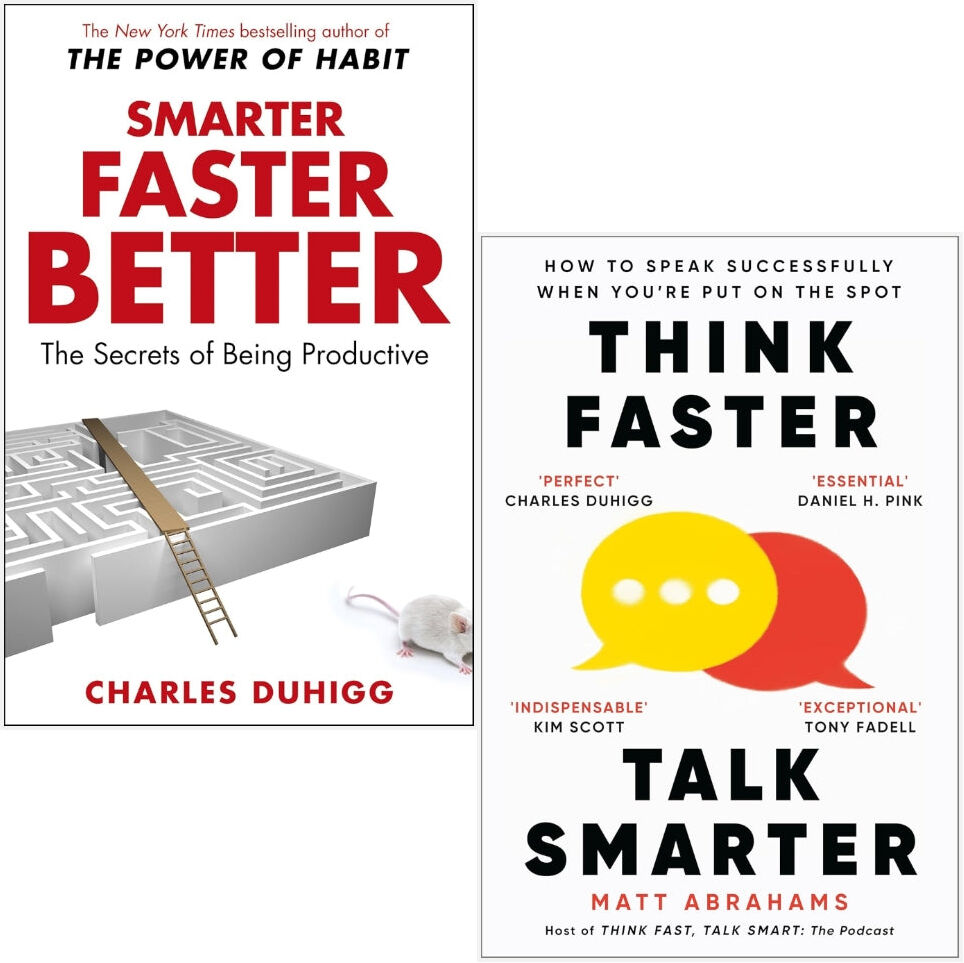
Random House Books/Macmillan Business Smarter Faster Better by Charles Duhigg and Think Faster, Talk Smarter by Matt Abrahams 2 Books SetSmarter Faster Better by Charles Duhigg Drawing on the very latest findings in neuroscience, psychology and behavioural economics, he demonstrates the eight simple principles that govern productivity. He demonstrates how the most dynamic and effective people – from CEOs to film-makers to software entrepreneurs – deploy them. And he shows how you can, too. Think Faster, Talk Smarter by Matt Abrahams Communication is crucial to success in life and business. However, it is not just big speeches that matter: it is also those critical, spur-of-the-moment situations for which we cannot prepare. A prospective client asking unexpected questions during a sales pitch, a teacher singling you out for an answer during a class, a high-pressure meeting with senior executives at work, or even a heartwarming toast to deliver on the spot. All are fraught scenarios that might cause you to freeze up. The pandemic boosted this fear, by stripping the spontaneity from communication during lockdown, and then changing the communication landscape in the years since.11,99 £*Shipping: 2,99 £Secure redirect to the provider
-
Cornerstone Press Atomic Habits & The Atomic Habits Workbook – 2 Books Collection Set by James Clear Build Good Habits & Break Bad OnesTransform your habits and your life with the Atomic Habits & The Atomic Habits Workbook – 2 Books Collection Set by James Clear. This powerful set combines the bestselling book Atomic Habits, which reveals a proven system for building good habits and breaking bad ones, with the official companion workbook, designed to help you apply these principles in everyday life. Together, they offer a practical, step-by-step approach to creating lasting personal and professional change. Based on behavioral science and real-world examples, James Clear shows how small, consistent improvements lead to remarkable results. The workbook provides exercises, prompts, and habit-tracking tools to turn ideas into action. Atomic Habits Transform your life with tiny changes in behaviour, starting now. People think that when you want to change your life, you need to think big. But world-renowned habits expert James Clear has discovered another way. He knows that real change comes from the compound effect of hundreds of small decisions: doing two push-ups a day, waking up five minutes early, or holding a single short phone call. He calls them atomic habits. In this ground-breaking book, Clears reveals exactly how these minuscule changes can grow into such life-altering outcomes. He uncovers a handful of simple life hacks (the forgotten art of Habit Stacking, the unexpected power of the Two Minute Rule, or the trick to entering the Goldilocks Zone), and delves into cutting-edge psychology and neuroscience to explain why they matter. Along the way, he tells inspiring stories of Olympic gold medalists, leading CEOs, and distinguished scientists who have used the science of tiny habits to stay productive, motivated, and happy. These small changes will have a revolutionary effect on your career, your relationships, and your life. The Atomic Habits Workbook The official companion to the #1 worldwide bestseller is the next step in your habits toolkit. Guided journal prompts will help you engage with your habits and the forces that impact them. Thought-provoking exercises allow you to implement the Atomic Habits theories and see your life transform. This workbook takes the reader from understanding habits to living them. James Clear's system helps good habits emerge naturally while unwanted habits fade away. What's included: - Guided templates for easy habit tracking and habit stacking - Journaling prompts to help you assess your physical and social environments, identify forces at play, and strategize for greatest habit success - Strategies for overcoming the habit plateau and sticking with your habits, even when the going gets rough - Plans for adapting your habits to fit your ever-changing life - New ideas from Clear on the role of fun in habit formation Packed with tips, tricks, and activities, The Atomic Habits Workbook is your step-by-step guide to making small changes that will transform your habits and deliver remarkable results.21,99 £*Shipping: 2,99 £Secure redirect to the provider
-
Harriman House The Psychology of Money, Atomic Habits & The Courage to Be Disliked – 3 Book Collection Set Bestselling Self-Development, Personal Finance, Self-HelUpgrade your mindset, habits, and financial thinking with this powerful 3-book collection set, featuring three of the most influential modern self-development titles. This essential bundle includes: The Psychology of Money by Morgan Housel – Discover how emotions and behaviour shape financial decisions and long-term wealth. Atomic Habits by James Clear – Learn how small habits can create powerful, lasting change. The Courage to Be Disliked by Ichiro Kishimi & Fumitake Koga** – Explore a transformative approach to happiness, freedom, and self-acceptance based on Adlerian psychology. Together, these books offer a complete guide to financial wisdom, personal growth, emotional resilience, and habit-building, making this set ideal for anyone looking to improve their life and mindset. Why Readers Love This Collection: Includes 3 bestselling modern self-development books Covers money, habits, mindset, and personal freedom Practical, easy-to-apply life lessons Perfect for beginners and experienced readers alike Ideal gift for motivation and self-improvement A must-have for anyone on a journey of personal growth, this collection delivers powerful insights for building a better, more successful life.22,99 £*Shipping: 2,99 £Secure redirect to the provider
-
Do smarter people think faster?
Smarter people may not necessarily think faster in terms of processing speed, but they may have the ability to process and analyze information more efficiently. Their cognitive abilities and problem-solving skills may allow them to come to conclusions and make decisions more quickly. However, thinking speed can also be influenced by factors such as attention, focus, and mental agility, which may not always be directly correlated with intelligence. Therefore, while intelligence can contribute to faster thinking in some cases, it is not the sole determining factor. **
-
Are people who can calculate faster in their head or read quickly smarter?
Intelligence is a complex trait that cannot be solely determined by one's ability to calculate quickly or read fast. These skills may be indicative of certain cognitive abilities, but they do not encompass the full range of intelligence. Intelligence is multifaceted and includes various abilities such as problem-solving, critical thinking, creativity, and emotional intelligence. Therefore, it is not accurate to equate quick mental calculations or fast reading with overall intelligence. **
-
Does a lot of thinking make you smarter and lead to faster thinking?
Engaging in a lot of thinking can certainly improve cognitive abilities and lead to faster thinking in some cases. However, the quality of thinking is just as important as the quantity. Engaging in critical thinking, problem-solving, and learning new information can all contribute to improved cognitive function. Additionally, taking breaks and allowing the mind to rest and recharge is also important for optimal cognitive performance. Therefore, while thinking a lot can contribute to improved intelligence and faster thinking, it is important to balance it with rest and relaxation. **
-
Can sleep habits only be habits that can be changed?
Sleep habits are behaviors and routines that can be changed with effort and consistency. By making adjustments to our bedtime routine, sleep environment, and overall lifestyle choices, we can improve our sleep habits. While it may take time and dedication to establish new habits, it is possible to make positive changes to our sleep patterns for better overall health and well-being. **
Similar search terms for Atomic-Habits-Smarter-Faster
-
Thorsons/Cornerstone/Harriman House Ultralearning, Atomic Habits and The Psychology of Money 3 Books SetUltralearning Future-proof your career and maximize your competitive advantage by learning the skill necessary to stay relevant, reinvent yourself, and adapt to whatever the workplace throws your way in this essential guide. Faced with tumultuous economic times and rapid technological change, staying ahead in your career depends on continual learning―a lifelong mastery of new ideas, subjects, and skills. If you want to accomplish more and stand apart from everyone else, you need to become an ultralearner. Atomic Habits Transform your life with tiny changes in behaviour, starting now. People think that when you want to change your life, you need to think big. But world-renowned habits expert James Clear has discovered another way. He knows that real change comes from the compound effect of hundreds of small decisions: doing two push-ups a day, waking up five minutes early, or holding a single short phone call. The Psychology of Money Doing well with money isn't necessarily about what you know. It's about how you behave. And behavior is hard to teach, even to really smart people. Money investing, personal finance, and business decisions is typically taught as a math-based field, where data and formulas tell us exactly what to do. But in the real world people don't make financial decisions on a spreadsheet. They make them at the dinner table, or in a meeting room, where personal history, your own unique view of the world, ego, pride, marketing, and odd incentives are scrambled together.29,99 £*Shipping: 2,99 £Secure redirect to the provider
-
Harriman House Atomic Habits, The Compound Effect, The Psychology of Money 3 Books Collection SetAtomic Habits People think that when you want to change your life, you need to think big. But world-renowned habits expert James Clear has discovered another way. He knows that real change comes from the compound effect of hundreds of small decisions: doing two push-ups a day, waking up five minutes early, or holding a single short phone call. The Compound Effect As the central curator of the success media industry for over 25 years, author Darren Hardy has heard it all, seen it all, and tried most of it. This book reveals the core principles that drive success. The Compound Effect contains the essence of what every superachiever needs to know, practice, and master to obtain extraordinary success. Inside you will find strategies on: How to win--every time! The Psychology of Money Doing well with money isn't necessarily about what you know. It's about how you behave. And behavior is hard to teach, even to really smart people. Money investing, personal finance, and business decisions is typically taught as a math-based field, where data and formulas tell us exactly what to do. But in the real world people don't make financial decisions on a spreadsheet.22,95 £*Shipping: 2,99 £Secure redirect to the provider
-
HH Rich Dad Poor Dad, Atomic Habits, The Psychology of Money 3 Books Collection SetRich Dad Poor Dad, Atomic Habits, The Psychology of Money 3 Books Collection Set by Robert T. Kiyosaki, James Clear, Morgan Housel Titles in This Set: Rich Dad Poor Dad : What the Rich Teach Their Kids About Money That the Poor and Middle Class Do Not! Rich Dad Poor Dad consistently ranks among bestsellers around the world in the categories of Personal Finance, Parenting, and Investing, has been translated into 38 languages, and has sold more than 40 million copies worldwide. Rich Dad Poor Dad is Robert's story of growing up with two dads -his real father and the father of his best friend, his rich dad - and the waysin which both men shaped his thoughts about money and investing. The bookexplodes the myth that you need to earn a high income to be rich and explainsthe difference between working for money and having your money work for you. Atomic Habits : the life-changing million-copy #1 bestseller THE PHENOMENAL INTERNATIONAL BESTSELLER: OVER 1O MILLION COPIES SOLD WORLDWIDETransform your life with tiny changes in behaviour, starting now. People think that when you want to change your life, you need to think big. But world-renowned habits expert James Clear has discovered another way. He knows that real change comes from the compound effect of hundreds of small decisions: doing two push-ups a day, waking up five minutes early, or holding a single short phone call. He calls them atomic habits. In this ground-breaking book, Clears reveals exactly how these minuscule changes can grow into such life-altering outcomes. The Psychology of Money : Timeless lessons on wealth, greed, and happiness Doing well with money isn't necessarily about what you know. It's about how you behave. And behavior is hard to teach, even to really smart people. Money-investing, personal finance, and business decisions-is typically taught as a math-based field, where data and formulas tell us exactly what to do. But in the real world people don't make financial decisions on a spreadsheet. They make them at the dinner table, or in a meeting room, where personal history, your own unique view of the world, ego, pride, marketing, and odd incentives are scrambled together. In The Psychology of Money, award-winning author Morgan Housel shares 19 short stories exploring the strange ways people think about money and teaches you how to make better sense of one of life's most important topics.24,99 £*Shipping: 2,99 £Secure redirect to the provider
-
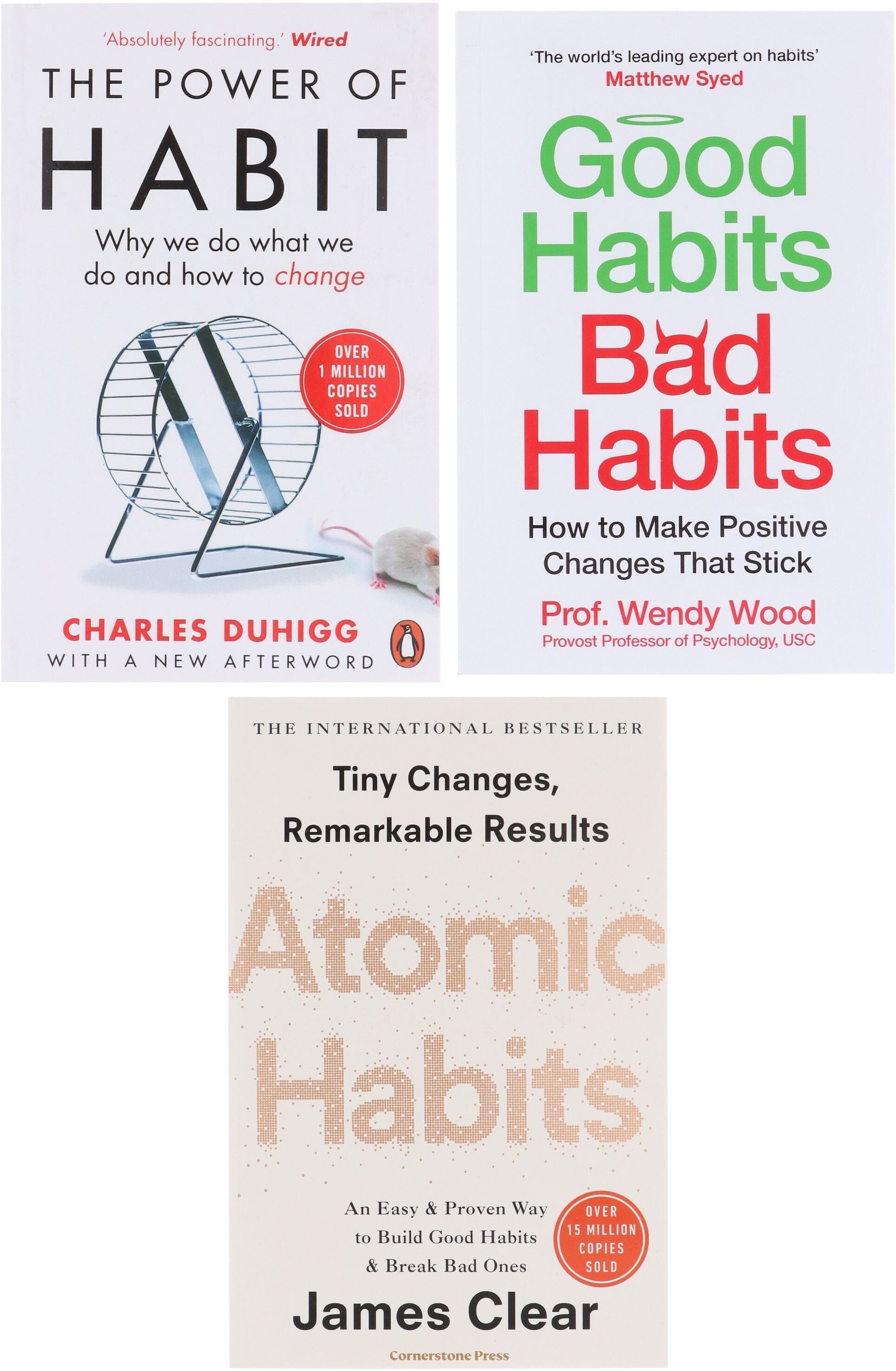
Atomic Habits, The Power of Habit & Good Habits, Bad Habits: 3 Books Collection Set - Non Fiction - Paperback penguin/MacmillanTitles in this Set: 1. Atomic Habits by James Clear 2. The Power of Habit by Charles Duhigg 3. Good Habits, Bad Habits by Prof. Wendy Wood Description: Atomic Habits by James Clear Transform your life with tiny changes in behaviour, starting now. People think that when you want to change your life, you need to think big. But world-renowned habits expert James Clear has discovered another way. He knows that real change comes from the compound effect of hundreds of small decisions: doing two push-ups a day, waking up five minutes early, or holding a single short phone call. He calls them atomic habits. In this ground-breaking book, Clears reveals exactly how these minuscule changes can grow into such life-altering outcomes. He uncovers a handful of simple life hacks (the forgotten art of Habit Stacking, the unexpected power of the Two Minute Rule, or the trick to entering the Goldilocks Zone), and delves into cutting-edge psychology and neuroscience to explain why they matter. Along the way, he tells inspiring stories of Olympic gold medalists, leading CEOs, and distinguished scientists who have used the science of tiny habits to stay productive, motivated, and happy. These small changes will have a revolutionary effect on your career, your relationships, and your life. The Power of Habit by Charles Duhigg There's never been a better time to set new habits. This book will change your life. In The Power of Habit, award-winning journalist Charles Duhigg takes us into the thrilling and surprising world of the scientific study of habits. He examines why some people and companies struggle to change, despite years of trying, while others seem to remake themselves overnight. He visits laboratories where neuroscientists explore how habits work and where, exactly, they reside in our brains. And he uncovers how the right habits were crucial to the success of Olympic swimmer Michael Phelps, Starbucks CEO Howard Schultz, and civil-rights hero Martin Luther King, Jr. The result is a compelling argument and an empowering discovery: the key to exercising regularly, losing weight, raising exceptional children, becoming more productive or even building revolutionary companies is understanding how habits work. By harnessing this new science, we can transform our businesses, our communities, and our lives. Good Habits, Bad Habits by Prof. Wendy Wood What if you could harness the extraordinary power of your unconscious mind to achieve your goals? Shockingly, we spend nearly half our day repeating things we've done in the past without thinking about them. How we respond to the people around us; the way we conduct ourselves in meetings; what we buy; when and how we exercise, eat and drink – a truly remarkable number of things we do every day, we do by habit. And yet, whenever we want to change something about ourselves, we rely on willpower alone. We hope that our determination and intention will be enough to effect positive change. And that is why almost all of us...14,99 £*Shipping: 2,99 £Secure redirect to the provider
-
Why are some people smarter than others and able to remember many things faster and better?
Some people may be smarter than others and have better memory retention due to a combination of genetic factors, environmental influences, and individual learning experiences. Genetics can play a role in determining cognitive abilities and memory capacity, while environmental factors such as access to education, nutrition, and mental stimulation can also impact cognitive development. Additionally, individual learning experiences and strategies can contribute to the ability to remember and process information more efficiently. Overall, the interplay of genetics, environment, and personal experiences can contribute to differences in cognitive abilities and memory retention among individuals. **
-
What are three habits?
Three habits are routines or behaviors that are regularly practiced. Examples of habits include exercising daily, reading before bed, or meditating in the morning. Habits can have a significant impact on our overall well-being and productivity. **
-
What are nitpicky habits?
Nitpicky habits are small, often insignificant details or imperfections that someone may focus on and become overly concerned with. These habits can include obsessing over minor flaws, being overly critical of small mistakes, or fixating on tiny details that others may not notice. Nitpicky habits can lead to a perfectionist mindset and can cause unnecessary stress and frustration for both the individual and those around them. **
-
What are picky habits?
Picky habits refer to behaviors or preferences where an individual is very selective or particular about certain things. This can manifest in various ways, such as being particular about food choices, having a specific routine that must be followed, or being very selective about the people they interact with. Picky habits can sometimes be seen as a form of perfectionism or control, and may impact an individual's daily life and relationships. It is important to understand the underlying reasons behind these habits and how they may be affecting one's overall well-being. **
* All prices are inclusive of VAT and, if applicable, plus shipping costs. The offer information is based on the details provided by the respective shop and is updated through automated processes. Real-time updates do not occur, so deviations can occur in individual cases. ** Note: Parts of this content were created by AI.