Buy lanpengeonline.eu ?
We are moving the project
lanpengeonline.eu .
Are you interested in purchasing the domain
lanpengeonline.eu ?
domain@kv-gmbh.de · 0541-91531010
Buy lanpengeonline.eu ?
What is the difference between proportional and inverse proportional?
Proportional and inverse proportional relationships are two types of relationships between two variables. In a proportional relationship, as one variable increases, the other variable also increases at a constant rate. This means that the ratio between the two variables remains the same. In an inverse proportional relationship, as one variable increases, the other variable decreases at a constant rate. This means that the product of the two variables remains constant. **
How can one recognize proportional and inverse proportional relationships?
Proportional relationships can be recognized when two quantities increase or decrease at the same rate. This means that when one quantity doubles, the other quantity also doubles. Inverse proportional relationships, on the other hand, can be recognized when one quantity increases while the other decreases at a constant rate, or vice versa. This means that when one quantity doubles, the other quantity is halved. One can recognize these relationships by plotting the data on a graph and observing if the points form a straight line through the origin for proportional relationships, or if the points form a curve for inverse proportional relationships. **

Similar search terms for Non-proportional
Top-Angebote
Products related to Non-proportional:
-
The Psychology Of Money, The Art of Spending Money & Same as Ever by Morgan Housel 3 Books Collection Set - Non Fiction - Paperback Pan MacmillanTitles in this set: 1. Same as Ever 2. The Psychology of Money 3. The Art of Spending Money Description: Same as Ever When planning for the future we often ask, “What will the economy be doing this time next year?” Or, “What will be different ten years from now?” But forecasting is hard. The important events that will shape the future are inherently unpredictable. Instead, we should be asking a different question: What will be the same ten years from now? What will be the same one hundred years from now? Knowledge of the things that never change is more useful, and more important, than an uncertain prediction of an unknowable future. In Same As Ever, bestselling author Morgan Housel shares 24 short stories about the ways that life, behaviour, and business will always be the same. Armed with this knowledge of the unchanging, you will have a powerful new ability to think about risk, opportunity, and how to navigate the uncertainty of the future. The Psychology of Money Doing well with money isn't necessarily about what you know. It's about how you behave. And behavior is hard to teach, even to really smart people. Money investing, personal finance, and business decisions is typically taught as a math-based field, where data and formulas tell us exactly what to do. But in the real world people don't make financial decisions on a spreadsheet. They make them at the dinner table, or in a meeting room, where personal history, your own unique view of the world, ego, pride, marketing, and odd incentives are scrambled together. In The Psychology of Money, award-winning author Morgan Housel shares 19 short stories exploring the strange ways people think about money and teaches you how to make better sense of one of life's most important topics. The Art of Spending Money Can money buy happiness? Yes. Can spending it make you happier? Absolutely. Yet, many of us struggle to unlock its full potential – either by spending on things that don't bring as much joy as they should, or by avoiding investments that would truly enhance our mental well-being. In The Art of Spending Money, award-winning and global bestselling author Morgan Housel offers a refreshingly practical approach to managing wealth while finding deeper meaning and contentment. Instead of cookie-cutter financial advice, Housel provides you with psychological tools to navigate your personal relationship with money and optimise for happiness. Discover why people often mistake envy for admiration, how to align your expectations with your income, and ways to invest in future happiness while avoiding regret. Learn about the dangers of social debt and embrace the radical idea that the fastest way to build wealth is by going slow. The Art of Spending Money delves into the complexities that surround money – envy, social aspirations, identity, and insecurity – crucial aspects often missed in traditional financial books. Armed with new insights into money and wealth, you’ll learn to sidestep common spending...26,99 £*Shipping: 2,99 £Secure redirect to the provider
-
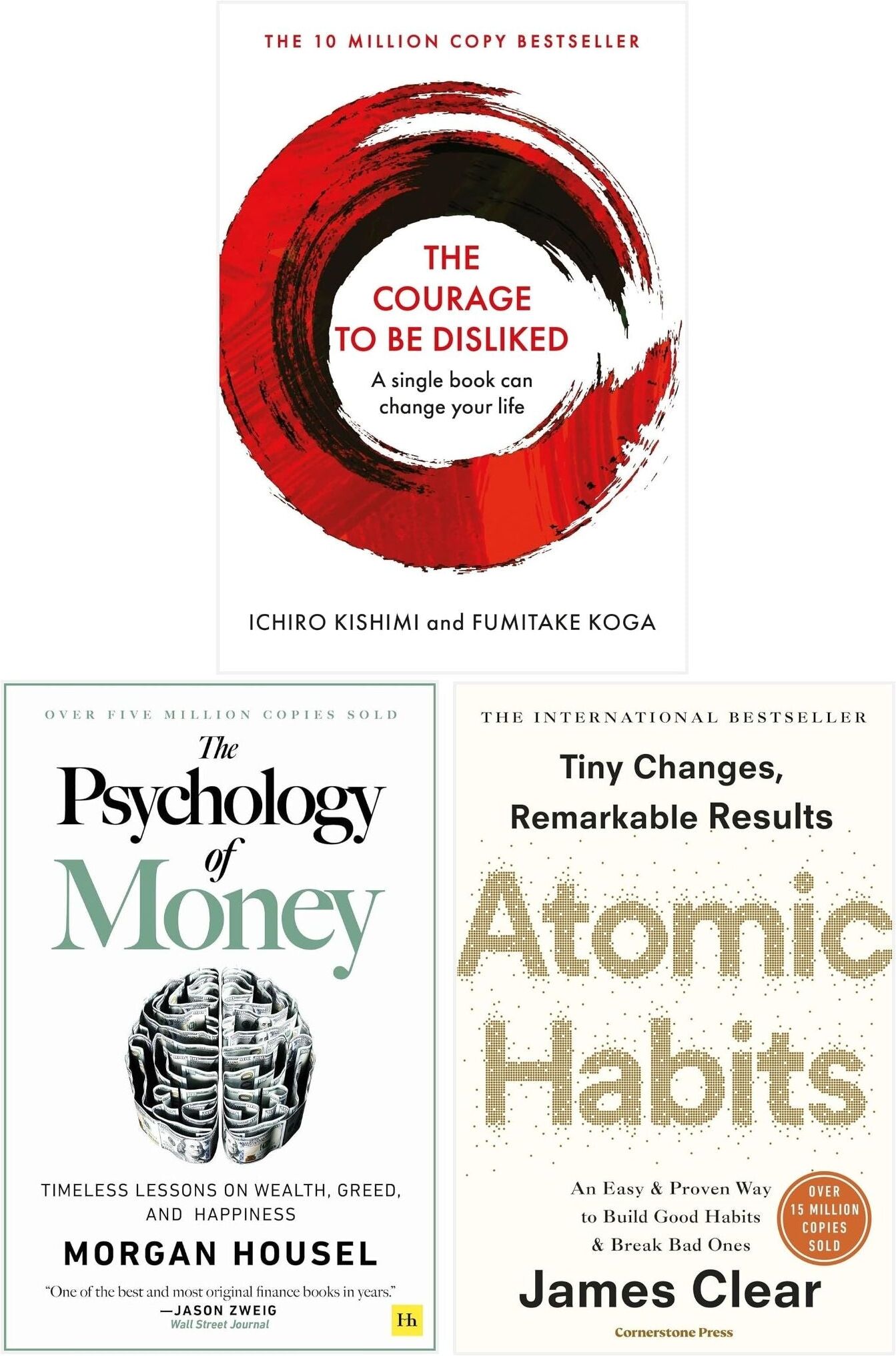
Harriman House The Psychology of Money, Atomic Habits & The Courage to Be Disliked – 3 Book Collection Set Bestselling Self-Development, Personal Finance, Self-HelUpgrade your mindset, habits, and financial thinking with this powerful 3-book collection set, featuring three of the most influential modern self-development titles. This essential bundle includes: The Psychology of Money by Morgan Housel – Discover how emotions and behaviour shape financial decisions and long-term wealth. Atomic Habits by James Clear – Learn how small habits can create powerful, lasting change. The Courage to Be Disliked by Ichiro Kishimi & Fumitake Koga** – Explore a transformative approach to happiness, freedom, and self-acceptance based on Adlerian psychology. Together, these books offer a complete guide to financial wisdom, personal growth, emotional resilience, and habit-building, making this set ideal for anyone looking to improve their life and mindset. Why Readers Love This Collection: Includes 3 bestselling modern self-development books Covers money, habits, mindset, and personal freedom Practical, easy-to-apply life lessons Perfect for beginners and experienced readers alike Ideal gift for motivation and self-improvement A must-have for anyone on a journey of personal growth, this collection delivers powerful insights for building a better, more successful life.22,99 £*Shipping: 2,99 £Secure redirect to the provider
-
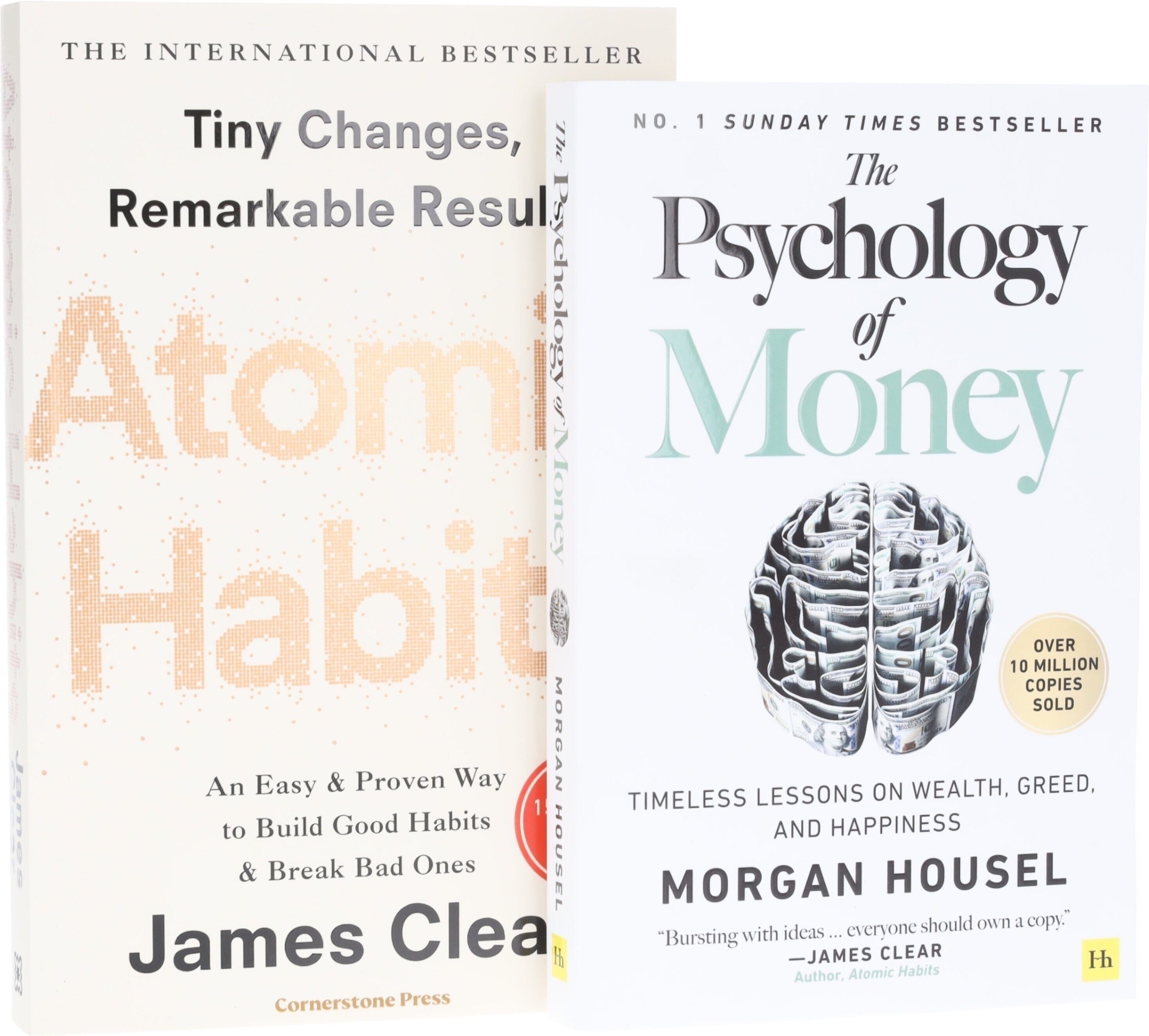
Atomic Habits by James Clear and The Psychology of Money by Morgan Housel: 2 Books Collection Set - Non Fiction - Paperback VariousIntroducing the ultimate duo for personal and financial growth - the Atomic Habits and Psychology of Money book set! This powerful combination of two insightful books will transform your mindset, habits, and finances for the better. Don’t forget to check out our range of self-help books too, you never know what inspirational read is waiting for you. Buy these internationally bestselling books while stock lasts. These books are also the perfect gifts for friends and family. First up, Atomic Habits by James Clear. In this book, Clear takes a deep dive into the science of habit formation and offers practical strategies to help readers develop good habits and break bad ones. Clear uses real-life examples to illustrate his points, making the book relatable and easy to apply to one's own life. Readers will learn how to identify the cues, cravings, and rewards that drive their habits and how to use this knowledge to create lasting change. The book also delves into the importance of small, incremental improvements and the power of compounding in achieving big goals. Next, we have The Psychology of Money by Morgan Housel. This book explores the psychology behind our financial behaviours and beliefs. Housel breaks down the common myths and misconceptions that people have about money and offers a refreshing perspective on how to approach wealth. Readers will learn how to develop a healthy relationship with money and understand the key factors that influence financial success. Housel also discusses the importance of setting goals, living below your means, and investing wisely. Title in This Set: Atomic Habits by James Clear The Psychology of Money by Morgan Housel Together, these two books offer a comprehensive guide to personal and financial growth. The Atomic Habits and Psychology of Money book set is perfect for anyone who wants to make positive changes in their life and take control of their finances. The Atomic Habits book alone has received rave reviews from readers and critics alike. Morgan Housel, the author of Psychology of Money, has been called one of the most influential writers in the personal development space. Both authors have a reputation for being clear, concise, and practical in their writing style. Whether you're looking to improve your health, build better relationships, or achieve financial freedom, the Atomic Habits and Psychology of Money book set provides the tools and insights you need to succeed. These books are not only informative but also inspiring, offering a fresh perspective on personal growth and financial management. The Atomic Habits and Psychology of Money book set comes in a sleek and stylish package, making it the perfect gift for yourself or a loved one. The books are easy to read and understand, making them accessible to readers of all levels. In conclusion, the Atomic Habits and Psychology of Money book set is a must-have for anyone looking to improve their lives and finances. The books offer practical advice and...16,99 £*Shipping: 2,99 £Secure redirect to the provider
-
Money, Life Leverage & Start Now. Get Perfect Later: By Rob Moore 3 Books Collection Set - Non Fiction - Paperback John Murray PressTitles in this set: 1. Money 2. Life Leverage 3. Start Now. Get Perfect Later Description: Money Do you want to get to the stage - soon - where you are truly financially independent, able to use your money in the way you'd like, and be completely confident in your ability to take care of yourself and your family? That is a universal desire, but many of us regard wealth and financial independence as a goal which we'll likely never achieve - there are just too many bills that need paying and there is a widespread belief that the money game is rigged. Even people who win the lottery or inherit money often seem to wind up losing it. The evidence suggests you can't win a game that you don't understand - even if you start out winning - because you never understood the game in the first place. So how can you win with money? How can you create independent wealth and hold on to it? This inspiring book by self-made multi-millionaire Rob Moore explains the rules of the game, shares simple tricks for managing money better, details how to create a plan for an ambitious future, and shows you the very best way to become a millionaire - to think and behave like one! Life Leverage You are just one small step away from the life you know you deserve. It's time to leverage your life. Life Leverage means taking control of your life, easily balancing your work and free time, making the most money with the minimum time input & wastage, and living a happier and more successful life. Using Rob Moore's remarkable Life Leverage model, you'll quickly banish & outsource all your confusion, frustration and stress & live your ideal, globally mobile life, doing more of what you love on your own terms. Learn how to: - Live a life of clarity & purpose, merging your passion & profession - Make money & make a difference, banishing work unhappiness - Use the fast-start wealth strategies of the new tech-rich - Maximise the time you have; don't waste a moment by outsourcing everything - Leverage all the things in your life that don't make you feel alive Start Now. Get Perfect Later Hardly anyone gets it right the first time, but many of us are crippled by indecision and fear of failure. The desire to get it right can inhibit us from getting started. In this book Rob Moore, the bestselling author of MONEY, shows that the quickest way to perfect is starting right now and improving as you go. This book will show you how to launch your business or idea, begin the next phase of your career, and overcome self-doubt - right away. Get perfect later, get started NOW.10,99 £*Shipping: 2,99 £Secure redirect to the provider


-
What is the difference between proportional relationships and inverse proportional relationships?
Proportional relationships are those in which the two variables increase or decrease at a constant rate. In other words, when one variable doubles, the other variable also doubles. In contrast, inverse proportional relationships are those in which one variable increases as the other decreases, and vice versa. In an inverse proportional relationship, the product of the two variables remains constant. In other words, when one variable doubles, the other variable is halved. **
-
What are proportional relationships?
Proportional relationships are relationships between two quantities where they change in a consistent manner. This means that as one quantity increases or decreases, the other quantity also increases or decreases in a predictable way. In a proportional relationship, the ratio between the two quantities remains constant. This can be represented by a straight line when graphed. **
-
Which of the relationships is inversely proportional and which is directly proportional?
The relationship between the distance traveled and the time taken is inversely proportional, as the faster you travel, the less time it takes to reach a destination. On the other hand, the relationship between the force applied and the acceleration produced is directly proportional, as increasing the force applied will result in a corresponding increase in acceleration. **
-
Which of the assignments is inversely proportional and which is directly proportional?
The assignment of distance traveled and time taken is inversely proportional, as the distance traveled decreases as the time taken increases. On the other hand, the assignment of force and acceleration is directly proportional, as the force increases, the acceleration also increases. **
How can I recognize if a function is proportional or inversely proportional?
You can recognize if a function is proportional by checking if the ratio of the output to the input is constant. In other words, if the function can be written in the form y = kx, where k is a constant, then the function is proportional. On the other hand, if the function can be written in the form y = k/x, where k is a constant, then the function is inversely proportional. Additionally, if the graph of the function is a straight line passing through the origin, it is proportional, while if the graph is a hyperbola, it is inversely proportional. **
How can one determine whether it is a proportional or inverse proportional relationship?
One can determine whether a relationship is proportional or inverse proportional by examining the pattern of the data points. In a proportional relationship, as one variable increases, the other variable also increases at a constant rate. This results in a straight line passing through the origin when the data is plotted on a graph. In an inverse proportional relationship, as one variable increases, the other variable decreases at a constant rate. This relationship is represented by a curve that approaches but never touches either axis when graphed. **
Top-Angebote
Products related to Non-proportional:
-
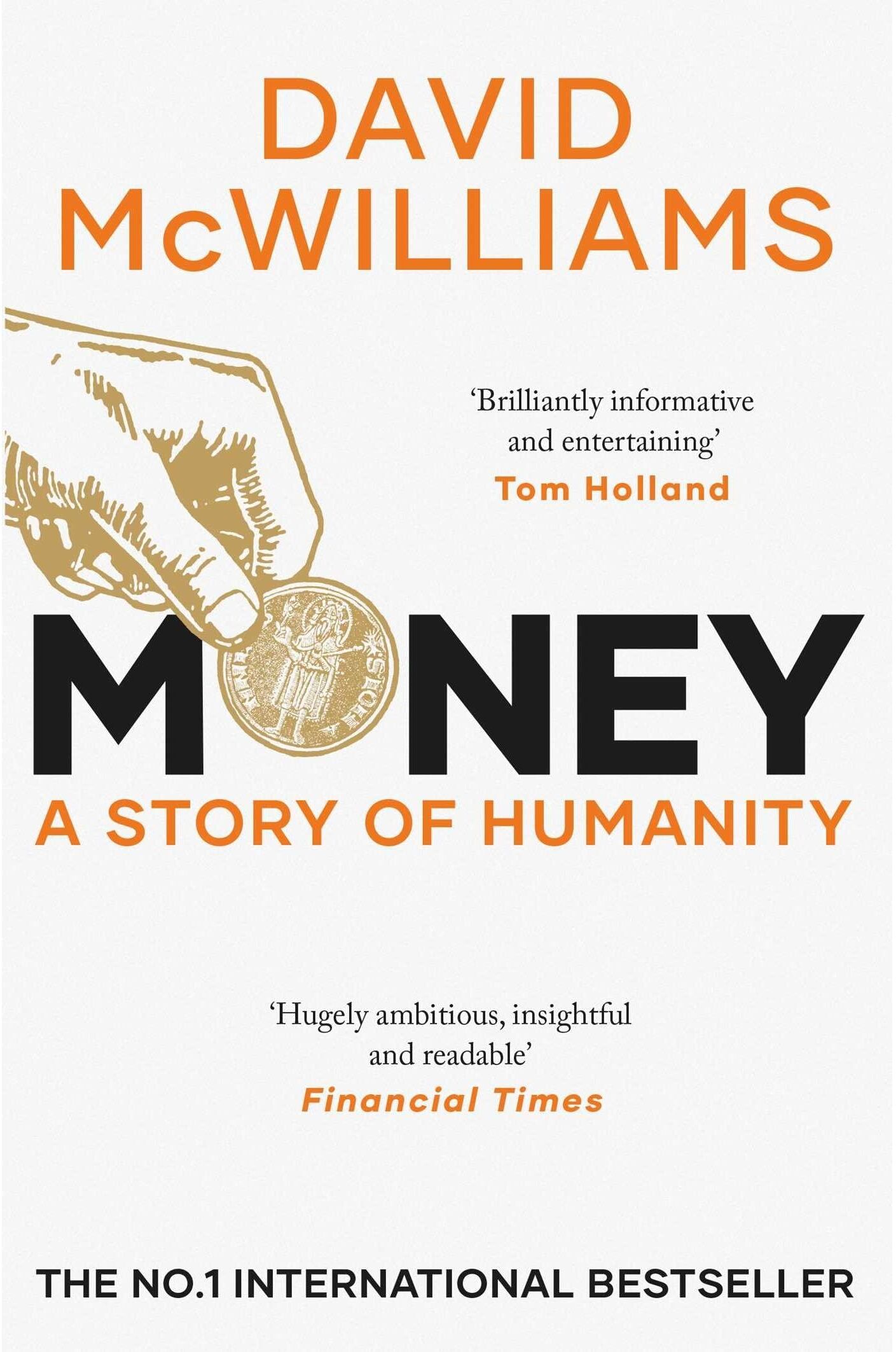
Simon & Schuster Money: A Story of Humanity by David McWilliams Economic History & Global Finance ExplainedIn Money: A Story of Humanity, renowned economist David McWilliams explores the fascinating history of money — not just as currency, but as a powerful force that has shaped human civilisation, relationships, technology, and global society. From ancient barter systems to cryptocurrency revolutions, McWilliams reveals how money reflects our values, ambitions, fears, politics, and culture.Rich with storytelling, sharp insights, and humour, this book makes complex economic ideas accessible, engaging, and deeply human. Perfect for readers who enjoy exploring how history, psychology, markets, and power intersect, Money: A Story of Humanity provides a fresh, eye-opening look at how money drives — and is driven by — human behaviour. Ideal for fans of Yuval Noah Harari, Tim Harford, Niall Ferguson, and Mary Beard.7,99 £*Shipping: 2,99 £Secure redirect to the provider
-
Perfect Picks Market Toy Cash Register For Kids, Checkout Scanner, Play Money Food Set, , Credit Card Machine, Fruit Card Reader Toy Cash Register For Kids, Checkout Scanner, Play Money Food Set, , Credit Card Machine, Fruit Card ReaderEngage Your Child with Playful Learning The 33PCS Toy Cash Register for Kids with Checkout Scanner is a perfect way to help children develop essential skills while having fun! Designed for little ones, this interactive toy includes a realistic...59,97 $*Shipping: 0,00 $Secure redirect to the provider
-
The Psychology Of Money, The Art of Spending Money & Same as Ever by Morgan Housel 3 Books Collection Set - Non Fiction - Paperback Pan MacmillanTitles in this set: 1. Same as Ever 2. The Psychology of Money 3. The Art of Spending Money Description: Same as Ever When planning for the future we often ask, “What will the economy be doing this time next year?” Or, “What will be different ten years from now?” But forecasting is hard. The important events that will shape the future are inherently unpredictable. Instead, we should be asking a different question: What will be the same ten years from now? What will be the same one hundred years from now? Knowledge of the things that never change is more useful, and more important, than an uncertain prediction of an unknowable future. In Same As Ever, bestselling author Morgan Housel shares 24 short stories about the ways that life, behaviour, and business will always be the same. Armed with this knowledge of the unchanging, you will have a powerful new ability to think about risk, opportunity, and how to navigate the uncertainty of the future. The Psychology of Money Doing well with money isn't necessarily about what you know. It's about how you behave. And behavior is hard to teach, even to really smart people. Money investing, personal finance, and business decisions is typically taught as a math-based field, where data and formulas tell us exactly what to do. But in the real world people don't make financial decisions on a spreadsheet. They make them at the dinner table, or in a meeting room, where personal history, your own unique view of the world, ego, pride, marketing, and odd incentives are scrambled together. In The Psychology of Money, award-winning author Morgan Housel shares 19 short stories exploring the strange ways people think about money and teaches you how to make better sense of one of life's most important topics. The Art of Spending Money Can money buy happiness? Yes. Can spending it make you happier? Absolutely. Yet, many of us struggle to unlock its full potential – either by spending on things that don't bring as much joy as they should, or by avoiding investments that would truly enhance our mental well-being. In The Art of Spending Money, award-winning and global bestselling author Morgan Housel offers a refreshingly practical approach to managing wealth while finding deeper meaning and contentment. Instead of cookie-cutter financial advice, Housel provides you with psychological tools to navigate your personal relationship with money and optimise for happiness. Discover why people often mistake envy for admiration, how to align your expectations with your income, and ways to invest in future happiness while avoiding regret. Learn about the dangers of social debt and embrace the radical idea that the fastest way to build wealth is by going slow. The Art of Spending Money delves into the complexities that surround money – envy, social aspirations, identity, and insecurity – crucial aspects often missed in traditional financial books. Armed with new insights into money and wealth, you’ll learn to sidestep common spending...26,99 £*Shipping: 2,99 £Secure redirect to the provider
-
Harriman House The Psychology of Money, Atomic Habits & The Courage to Be Disliked – 3 Book Collection Set Bestselling Self-Development, Personal Finance, Self-HelUpgrade your mindset, habits, and financial thinking with this powerful 3-book collection set, featuring three of the most influential modern self-development titles. This essential bundle includes: The Psychology of Money by Morgan Housel – Discover how emotions and behaviour shape financial decisions and long-term wealth. Atomic Habits by James Clear – Learn how small habits can create powerful, lasting change. The Courage to Be Disliked by Ichiro Kishimi & Fumitake Koga** – Explore a transformative approach to happiness, freedom, and self-acceptance based on Adlerian psychology. Together, these books offer a complete guide to financial wisdom, personal growth, emotional resilience, and habit-building, making this set ideal for anyone looking to improve their life and mindset. Why Readers Love This Collection: Includes 3 bestselling modern self-development books Covers money, habits, mindset, and personal freedom Practical, easy-to-apply life lessons Perfect for beginners and experienced readers alike Ideal gift for motivation and self-improvement A must-have for anyone on a journey of personal growth, this collection delivers powerful insights for building a better, more successful life.22,99 £*Shipping: 2,99 £Secure redirect to the provider
-
What is the difference between proportional and inverse proportional?
Proportional and inverse proportional relationships are two types of relationships between two variables. In a proportional relationship, as one variable increases, the other variable also increases at a constant rate. This means that the ratio between the two variables remains the same. In an inverse proportional relationship, as one variable increases, the other variable decreases at a constant rate. This means that the product of the two variables remains constant. **
-
How can one recognize proportional and inverse proportional relationships?
Proportional relationships can be recognized when two quantities increase or decrease at the same rate. This means that when one quantity doubles, the other quantity also doubles. Inverse proportional relationships, on the other hand, can be recognized when one quantity increases while the other decreases at a constant rate, or vice versa. This means that when one quantity doubles, the other quantity is halved. One can recognize these relationships by plotting the data on a graph and observing if the points form a straight line through the origin for proportional relationships, or if the points form a curve for inverse proportional relationships. **
-
What is the difference between proportional relationships and inverse proportional relationships?
Proportional relationships are those in which the two variables increase or decrease at a constant rate. In other words, when one variable doubles, the other variable also doubles. In contrast, inverse proportional relationships are those in which one variable increases as the other decreases, and vice versa. In an inverse proportional relationship, the product of the two variables remains constant. In other words, when one variable doubles, the other variable is halved. **
-
What are proportional relationships?
Proportional relationships are relationships between two quantities where they change in a consistent manner. This means that as one quantity increases or decreases, the other quantity also increases or decreases in a predictable way. In a proportional relationship, the ratio between the two quantities remains constant. This can be represented by a straight line when graphed. **
Similar search terms for Non-proportional
-
Atomic Habits by James Clear and The Psychology of Money by Morgan Housel: 2 Books Collection Set - Non Fiction - Paperback VariousIntroducing the ultimate duo for personal and financial growth - the Atomic Habits and Psychology of Money book set! This powerful combination of two insightful books will transform your mindset, habits, and finances for the better. Don’t forget to check out our range of self-help books too, you never know what inspirational read is waiting for you. Buy these internationally bestselling books while stock lasts. These books are also the perfect gifts for friends and family. First up, Atomic Habits by James Clear. In this book, Clear takes a deep dive into the science of habit formation and offers practical strategies to help readers develop good habits and break bad ones. Clear uses real-life examples to illustrate his points, making the book relatable and easy to apply to one's own life. Readers will learn how to identify the cues, cravings, and rewards that drive their habits and how to use this knowledge to create lasting change. The book also delves into the importance of small, incremental improvements and the power of compounding in achieving big goals. Next, we have The Psychology of Money by Morgan Housel. This book explores the psychology behind our financial behaviours and beliefs. Housel breaks down the common myths and misconceptions that people have about money and offers a refreshing perspective on how to approach wealth. Readers will learn how to develop a healthy relationship with money and understand the key factors that influence financial success. Housel also discusses the importance of setting goals, living below your means, and investing wisely. Title in This Set: Atomic Habits by James Clear The Psychology of Money by Morgan Housel Together, these two books offer a comprehensive guide to personal and financial growth. The Atomic Habits and Psychology of Money book set is perfect for anyone who wants to make positive changes in their life and take control of their finances. The Atomic Habits book alone has received rave reviews from readers and critics alike. Morgan Housel, the author of Psychology of Money, has been called one of the most influential writers in the personal development space. Both authors have a reputation for being clear, concise, and practical in their writing style. Whether you're looking to improve your health, build better relationships, or achieve financial freedom, the Atomic Habits and Psychology of Money book set provides the tools and insights you need to succeed. These books are not only informative but also inspiring, offering a fresh perspective on personal growth and financial management. The Atomic Habits and Psychology of Money book set comes in a sleek and stylish package, making it the perfect gift for yourself or a loved one. The books are easy to read and understand, making them accessible to readers of all levels. In conclusion, the Atomic Habits and Psychology of Money book set is a must-have for anyone looking to improve their lives and finances. The books offer practical advice and...16,99 £*Shipping: 2,99 £Secure redirect to the provider
-
Money, Life Leverage & Start Now. Get Perfect Later: By Rob Moore 3 Books Collection Set - Non Fiction - Paperback John Murray PressTitles in this set: 1. Money 2. Life Leverage 3. Start Now. Get Perfect Later Description: Money Do you want to get to the stage - soon - where you are truly financially independent, able to use your money in the way you'd like, and be completely confident in your ability to take care of yourself and your family? That is a universal desire, but many of us regard wealth and financial independence as a goal which we'll likely never achieve - there are just too many bills that need paying and there is a widespread belief that the money game is rigged. Even people who win the lottery or inherit money often seem to wind up losing it. The evidence suggests you can't win a game that you don't understand - even if you start out winning - because you never understood the game in the first place. So how can you win with money? How can you create independent wealth and hold on to it? This inspiring book by self-made multi-millionaire Rob Moore explains the rules of the game, shares simple tricks for managing money better, details how to create a plan for an ambitious future, and shows you the very best way to become a millionaire - to think and behave like one! Life Leverage You are just one small step away from the life you know you deserve. It's time to leverage your life. Life Leverage means taking control of your life, easily balancing your work and free time, making the most money with the minimum time input & wastage, and living a happier and more successful life. Using Rob Moore's remarkable Life Leverage model, you'll quickly banish & outsource all your confusion, frustration and stress & live your ideal, globally mobile life, doing more of what you love on your own terms. Learn how to: - Live a life of clarity & purpose, merging your passion & profession - Make money & make a difference, banishing work unhappiness - Use the fast-start wealth strategies of the new tech-rich - Maximise the time you have; don't waste a moment by outsourcing everything - Leverage all the things in your life that don't make you feel alive Start Now. Get Perfect Later Hardly anyone gets it right the first time, but many of us are crippled by indecision and fear of failure. The desire to get it right can inhibit us from getting started. In this book Rob Moore, the bestselling author of MONEY, shows that the quickest way to perfect is starting right now and improving as you go. This book will show you how to launch your business or idea, begin the next phase of your career, and overcome self-doubt - right away. Get perfect later, get started NOW.10,99 £*Shipping: 2,99 £Secure redirect to the provider
-
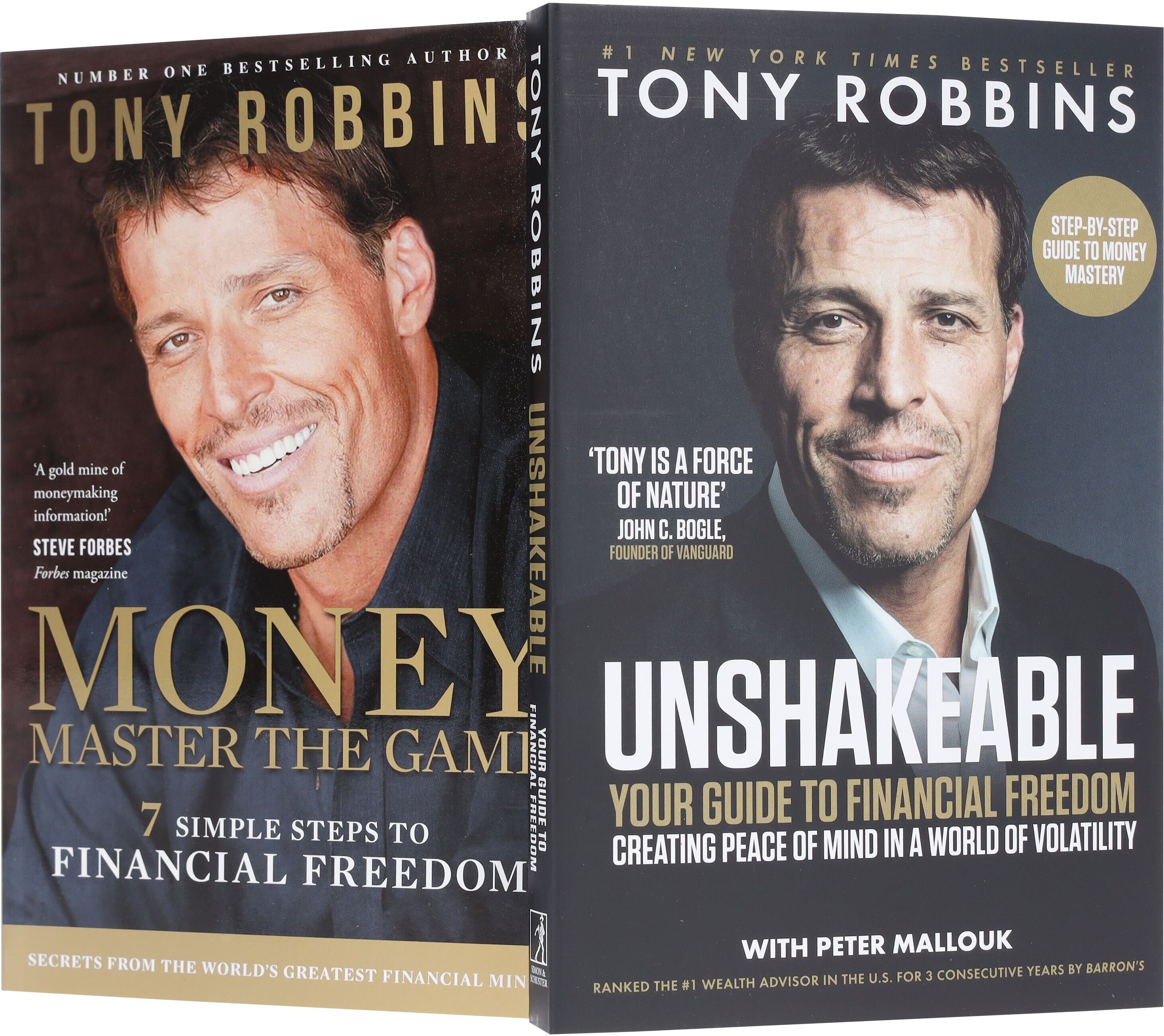
Tony Robbins Collection (Unshakeable: Your Guide to Financial Freedom & Money Master the Game) 2 Books Set - Non Fiction - Paperback Simon & SchusterTitles in this Set: 1. Unshakeable: Your Guide to Financial Freedom 2. Money Master the Game Description: Unshakeable: Your Guide to Financial Freedom Tony Robbins, arguably the most recognizable life and business strategist and guru, is back with a timely, unique follow-up to his smash New York Times bestseller Money: Master the Game. Market corrections are as constant as seasons are in nature. There have been 30 such corrections in the past 30 years, yet there’s never been an action plan for how not only to survive, but thrive through each change in the stock market. Building upon the principles in Money: Master the Game, Robbins offers the reader specific steps they can implement to protect their investments while maximizing their wealth. It’s a detailed guide designed for investors, articulated in the common-sense, practical manner that the millions of loyal Robbins fans and students have come to expect and rely upon. Few have navigated the turbulence of the stock market as adeptly and successfully as Tony Robbins. His proven, consistent success over decades makes him singularly qualified to help investors (both seasoned and first-timers alike) preserve and add to their investments. Money Master the Game Tony Robbins has created a 7-step blueprint for securing financial freedom. Based on extensive research and one-on-one interviews with more than 50 of the most legendary financial experts in the world - from Carl Icahn, to Warren Buffett, to Jack Bogle and Steve Forbes. Robbins has a brilliant way of using metaphor and story to illustrate even the most complex financial concepts - making them simple and actionable. With expert advice on our most important financial decisions, Robbins dispels the myths that often rob people of their financial dreams. Money: Master the Game contains expert advice for readers of every income level, providing guidance through the steps to become financially free by creating a lifetime income plan. This book delivers invaluable information and essential practices for getting your financial house in order. It's the book millions of people have been waiting for.12,99 £*Shipping: 2,99 £Secure redirect to the provider
-
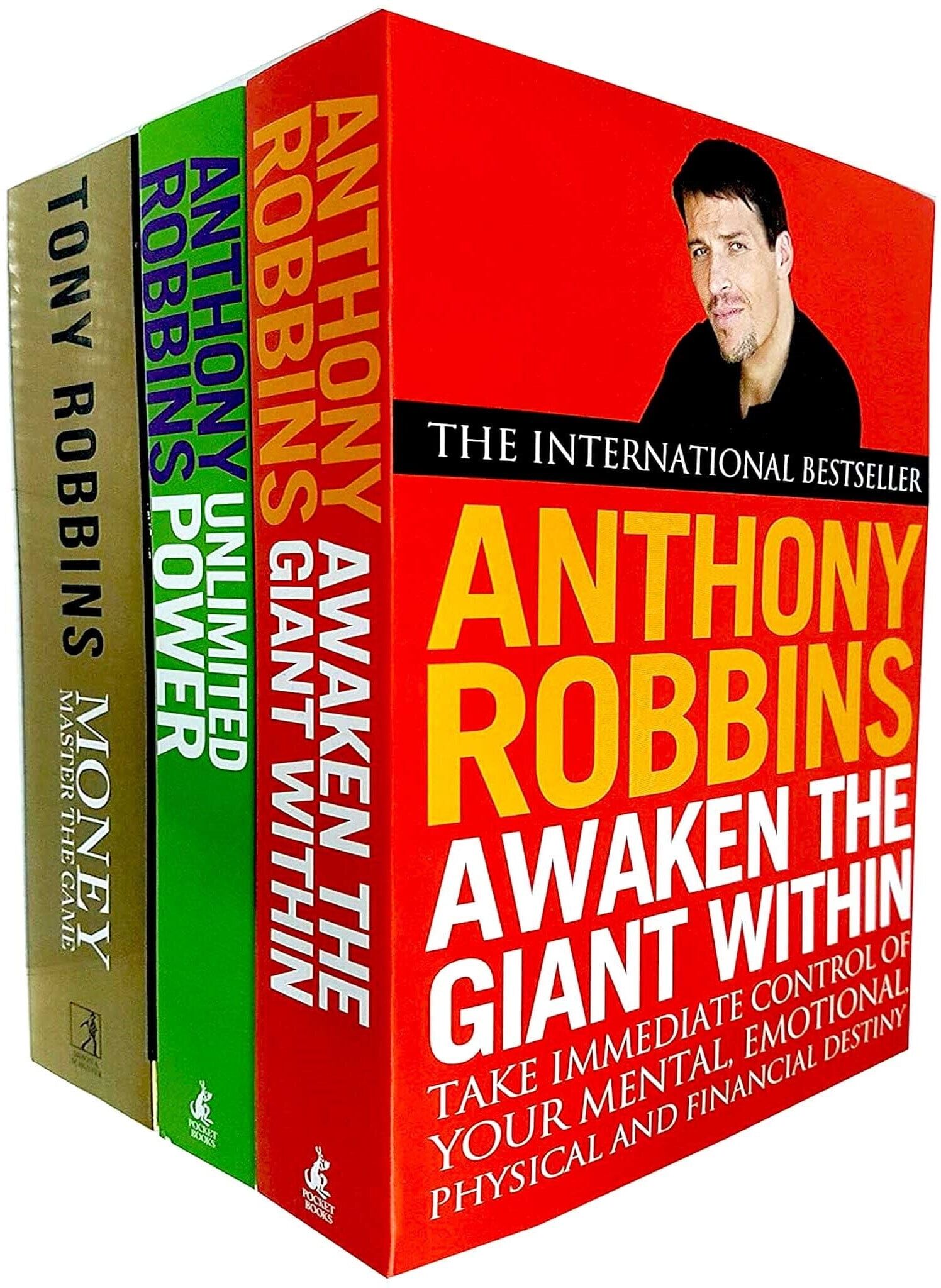
Tony Robbins Collection (Unlimited Power, Awaken The Giant Within & Money Master the Game) 3 Books Set - Non Fiction - Paperback Simon & SchusterTitle in This Set: 1. Unlimited Power 2. Awaken The Giant Within 3. Money Master the Game Description: Unlimited Power If you have ever dreamed of a better life, Unlimited Power will show you how to achieve the extraordinary quality of life you desire and deserve, and how to master your personal and professional life. Tony Robbins has proven to millions through his books, tapes and seminars that by harnessing the power of your mind you can do, have, achieve and create anything you want for your life. He has shown heads of state, royalty, Olympic and professional athletes and film stars how to achieve. Unlimited Power is a revolutionary fitness book for the mind. It will show you, step by step, how to perform at your peak while gaining emotional and financial freedom, attaining leadership and self-confidence and winning the co-operation of others. Awaken The Giant Within Are you in charge of your life? Or are you being swept away by things that are seemingly out of your control? In AWAKEN THE GIANT WITHIN, Anthony Robbins, the bestselling author of UNLIMITED POWER, shows the reader how to take immediate control of their mental, emotional, physical and financial destiny. Money Master the Game Tony Robbins has created a 7-step blueprint for securing financial freedom. Based on extensive research and one-on-one interviews with more than 50 of the most legendary financial experts in the world - from Carl Icahn, to Warren Buffett, to Jack Bogle and Steve Forbes. Robbins has a brilliant way of using metaphor and story to illustrate even the most complex financial concepts - making them simple and actionable. With expert advice on our most important financial decisions, Robbins dispels the myths that often rob people of their financial dreams. Money: Master the Game contains expert advice for readers of every income level, providing guidance through the steps to become financially free by creating a lifetime income plan. This book delivers invaluable information and essential practices for getting your financial house in order. It's the book millions of people have been waiting for.21,99 £*Shipping: 2,99 £Secure redirect to the provider
-
Which of the relationships is inversely proportional and which is directly proportional?
The relationship between the distance traveled and the time taken is inversely proportional, as the faster you travel, the less time it takes to reach a destination. On the other hand, the relationship between the force applied and the acceleration produced is directly proportional, as increasing the force applied will result in a corresponding increase in acceleration. **
-
Which of the assignments is inversely proportional and which is directly proportional?
The assignment of distance traveled and time taken is inversely proportional, as the distance traveled decreases as the time taken increases. On the other hand, the assignment of force and acceleration is directly proportional, as the force increases, the acceleration also increases. **
-
How can I recognize if a function is proportional or inversely proportional?
You can recognize if a function is proportional by checking if the ratio of the output to the input is constant. In other words, if the function can be written in the form y = kx, where k is a constant, then the function is proportional. On the other hand, if the function can be written in the form y = k/x, where k is a constant, then the function is inversely proportional. Additionally, if the graph of the function is a straight line passing through the origin, it is proportional, while if the graph is a hyperbola, it is inversely proportional. **
-
How can one determine whether it is a proportional or inverse proportional relationship?
One can determine whether a relationship is proportional or inverse proportional by examining the pattern of the data points. In a proportional relationship, as one variable increases, the other variable also increases at a constant rate. This results in a straight line passing through the origin when the data is plotted on a graph. In an inverse proportional relationship, as one variable increases, the other variable decreases at a constant rate. This relationship is represented by a curve that approaches but never touches either axis when graphed. **
* All prices are inclusive of VAT and, if applicable, plus shipping costs. The offer information is based on the details provided by the respective shop and is updated through automated processes. Real-time updates do not occur, so deviations can occur in individual cases. ** Note: Parts of this content were created by AI.